
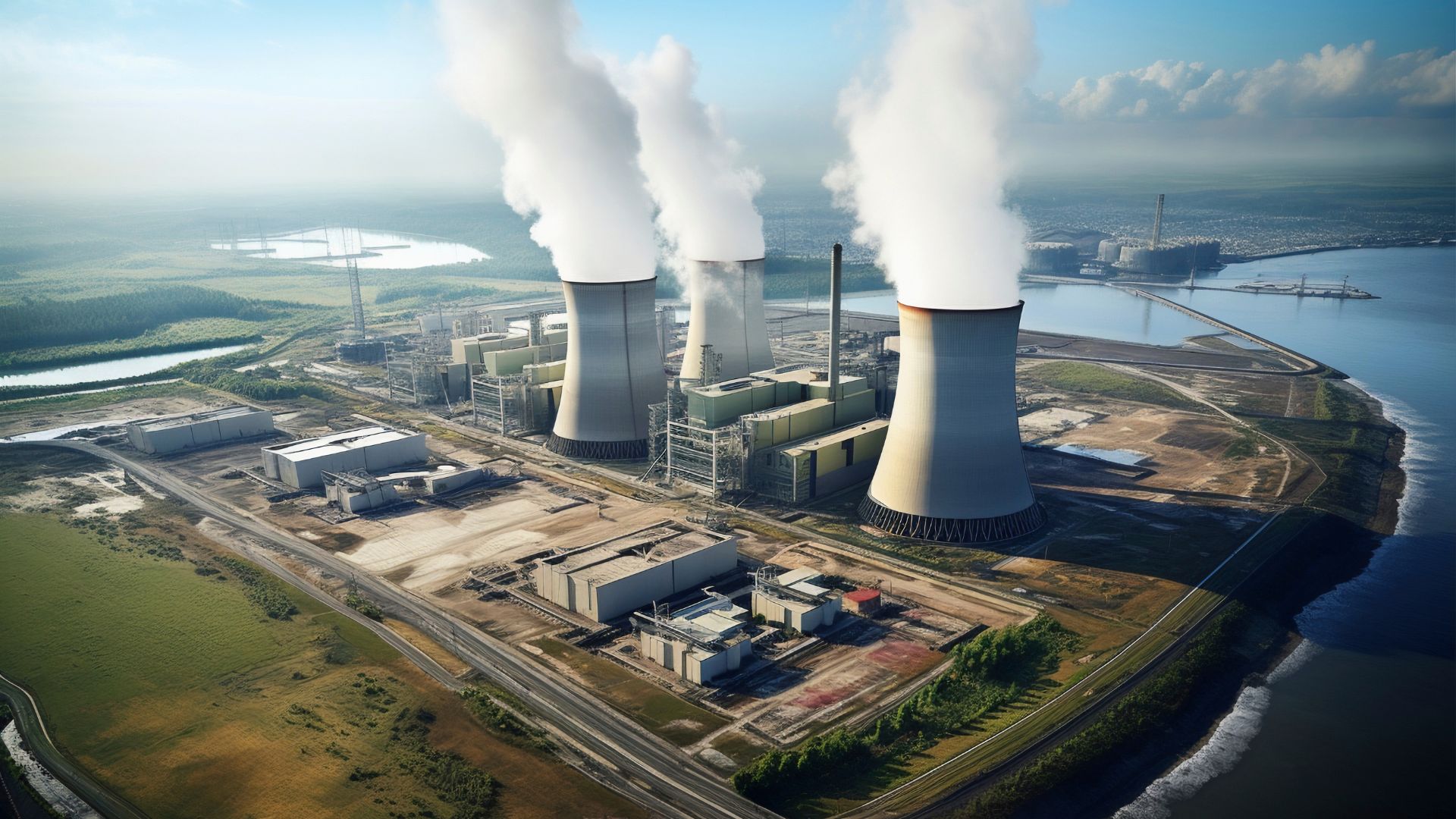
The need to have clean, reliable, and sustainable energy has never been higher in the world than it is today. With the increasing rate of climate change and depletion of fossil fuel resources, experts and inventors have been on a mad race to discover ways to energize the world rather than destroy it. Nuclear Fusion Energy is one of the most promising inventions of the 21st century amongst all the emerging technologies.
Nuclear Fusion Energy can generate a virtually unlimited amount of power compared to the traditional sources of energy, which emit greenhouse gases or have limited availability of resources. Fusion power has long been regarded as a technology of the future, and the recent improvements imply that this power source is not a thing of fiction anymore, but a gradual progression towards business realities.
At Next Gen Tech Labs, we explore transformative innovations that shape tomorrow. In this in-depth guide, we’ll break down how Nuclear Fusion Energy works, its key benefits, and why it’s widely regarded as the future of clean power.
What Is Nuclear Fusion Energy?
Nuclear Fusion Energy is the act of producing power by joining two light atomic nuclei into one of the heavier ones. This merging emits a tremendous energy- much higher than other sources of energy.
It is the same reaction as that of the sun and stars, which is fusion. Combining the hydrogen atoms under very high heat and pressure, helium is formed, and a lot of energy is emitted when the gases combine. Researchers are trying to duplicate this natural effect on Earth in order to develop a safe and sustainable energy supply.
Contrary to nuclear fission, where heavy atoms are torn apart and create radioactive wastes, Nuclear Fusion Energy uses lightweight fuels and produces very minimal long-lived wastes. This is the main contrast that makes fusion one of the cleanest energy technologies ever thought of.
How Nuclear Fusion Energy Works
There are eight stages in the process of Nuclear Fusion Energy that one can dissect to appreciate the strength of this kind of energy.
1. Fusion Fuel: Hydrogen Isotopes
Isotopes of tritium, hydrogen, and deuterium are usually used in fusion reactors. These are highly renewable fuels; Deuterium can be obtained from seawater, whereas tritium can be synthesized out of lithium.
2. Extreme Heat and Plasma Formation
To be able to fuse, hydrogen atoms have to get above 100 million degrees Celsius in temperature. In this level, the electrons are torn apart from the nuclei to create superheated resultant matter referred to as plasma.
3. Magnetic Confinement
There is no material that can withstand such temperatures; thus, the plasma is contained by strong magnetic fields. Suspending the plasma in mid-air, such as tokamaks and stellarators ensure the absence of contact of the plasma with the walls of the reactor.
4. Fusion Reaction and Energy Release
As the nuclei collide and fuse, a little bit of mass is directly transformed into energy, according to the well-known equation E = mc². This energy is tapped as heat and utilized into electricity.
The research on Nuclear Fusion Energy is aimed at the ultimate goal of getting a net energy gain, generating more energy than the reactor consumes.
Key Differences Between Fusion and Fission
| Aspect | Nuclear Fusion Energy | Nuclear Fission |
|---|---|---|
| Reaction | Combines atoms | Splits atoms |
| Fuel | Hydrogen isotopes | Uranium or plutonium |
| Waste | Minimal, short-lived | Long-lasting radioactive waste |
| Safety | No meltdown risk | Meltdown possible |
| Sustainability | Near-limitless | Finite resources |
This analogy clearly explains why Nuclear Fusion Energy is deemed safer, cleaner, and more sustainable.
Benefits of Nuclear Fusion Energy
1. Clean and Carbon-Free Power
Among the greatest benefits of Nuclear Fusion Energy is the fact that the energy does not emit carbon. This will make it a weapon of resistance against climate change.
2. Abundant Fuel Supply
Fusion fuel is generally abundant. One gallon of seawater has sufficient content of deuterium that can produce the energy of hundreds of gallons of gasoline.
3. Enhanced Safety
The fusion reactions are stable in nature. When there is an incident, the process just halts; there is no danger of out-of-control reactions or explosive meltdowns.
4. Minimal Radioactive Waste
Some of the components of the reactor can be slightly radioactive, but the wastes decay in a few decades, as opposed to a few thousand years in fission.
5. Massive Energy Output
Nuclear Fusion Energy is able to produce millions of times more energy with a fraction of the material that is used in fossil fuels.
Why Nuclear Fusion Energy Is the Future of Clean Power
Meeting Global Energy Demand
Renewable energy is potentially not sufficient as the world increases the amount of energy used. Nuclear Fusion Energy is the scalable solution that could produce energy for hundreds of cities and industries.
Supporting Renewable Energy
Fusion supplements solar and wind by giving them a steady base of energy, so that they can be certain when the sun is not shining or when the wind is not blowing.
Driving Technological Innovation
Nuclear Fusion Energy Research is boosting the development in materials science, superconductors, artificial intelligence, and plasma physics.
Energy Independence
Nations that make investments in fusion will cut reliance on imported fuels, which will increase the energy security of the country.
Current Progress and Global Research Efforts
Large global initiatives and individual ventures are drawing Nuclear Fusion Energy nearer to commercialization. Recently, record-breaking plasma confinement times and energy gains have been attained in experiments, indicating that plasma fusion is a practical process.
Governments as well as individual investors are investing billions of dollars in fusion research since they realize that the technology will transform the global energy scenario in the long run.
Challenges Facing Nuclear Fusion Energy
Although it is promising, Nuclear Fusion Energy operates with some issues:
- Maintaining stable plasma for extended periods
- Developing materials that withstand intense neutron bombardment
- Reducing construction and operational costs
- Scaling reactors for commercial use
However, with each breakthrough, these issues become easier to deal with.
The Role of AI and Advanced Computing
Artificial intelligence is becoming a critical role in the optimization of the Nuclear Fusion Energy experiments. Machine learning systems are used to predict the behavior of the plasma, regulate the magnetic fields, and mitigate instabilities in time.
In Next Gen Tech Labs, we acknowledge that it is not only physics that drives the fusion revolution, but also advanced computation and data science.
Economic and Environmental Impact
In the long-term, Nuclear Fusion Energy has colossal economic impacts. Fusion plants should be cheap to fuel, fuel prices should be predictable, and low levels of environmental remediation costs should be incurred when they become operational.
Fusion use would have an environmental impact that is both dramatic and beneficial; it would reduce air pollution, halt climate change, and destroy ecosystems that are caused by mining and drilling.
What the Future Holds for Nuclear Fusion Energy
Scientists suppose that pilot fusion power plants might provide electricity in several decades. With the reduction in cost and the maturation of technology, Nuclear Fusion Energy will probably encompass a part of the world’s energy portfolio.
This would be a historic move- the move where mankind would utilize the same power as the stars.
Conclusion: A Cleaner, Brighter Tomorrow
Nuclear Fission Energy is an example of one of the riskiest and most promising technological endeavours of humankind. It can change the way we live, work, and conserve our planet by providing clean, safe, and almost infinite energy.
The problems are not detrimental; on the contrary, a significant improvement is happening faster than ever before. Nuclear Fusion Energy may not be far away from the experimental laboratory and in daily use with further innovation, cooperation, and funding.
Fusion is not merely a source of energy at Next Gen Tech Labs; we think that fusion is a symbol of what can be done when science, technology, and vision are united to build a sustainable future.