The automobile industry is changing at a pace never before witnessed. Cars are no longer machines that will simply carry us from one place to another; they are turning into intelligent mobility systems that enhance comfort, safety, and driving efficiency.
ADAS (Advanced Driver Assistance Systems) is one of the largest innovations that is causing this change. These technologies are transforming road safety, as they are able to prevent accidents, be quicker and smarter in a car.
At Next Gen Tech Labs, we closely track emerging automotive technologies, and it’s clear that intelligent safety systems are no longer optional; they are becoming the foundation of modern vehicles.
In this guide, you’ll learn what ADAS is, how it works, its major features, benefits, limitations, and why it is shaping the future of driving as we approach 2026.
What is ADAS?
ADAS, also known as Advanced Driver Assistance Systems, are a set of electronic devices installed in a car to aid the driver when driving or especially when parking a vehicle.
These systems provide real-time data to identify any obstacles, track the environment, and alert the drivers to possible dangers. The vehicle is even able to take corrective action on most occasions.
The main objective of ADAS is straightforward:
- Eliminate accidents and save lives.
The most prevalent cause of road incidents all over the world is human error. Distractions, driver fatigue, impaired visibility, and reaction delay are some of the factors that cause thousands of accidents every day. These risks are minimized with the help of advanced driver assistance technologies that serve as a smart co-pilot.
ADAS can improve response time and increase awareness of the driver, rather than substituting them, which is an essential aspect of an accident prevention system.
How ADAS Works in Modern Vehicles
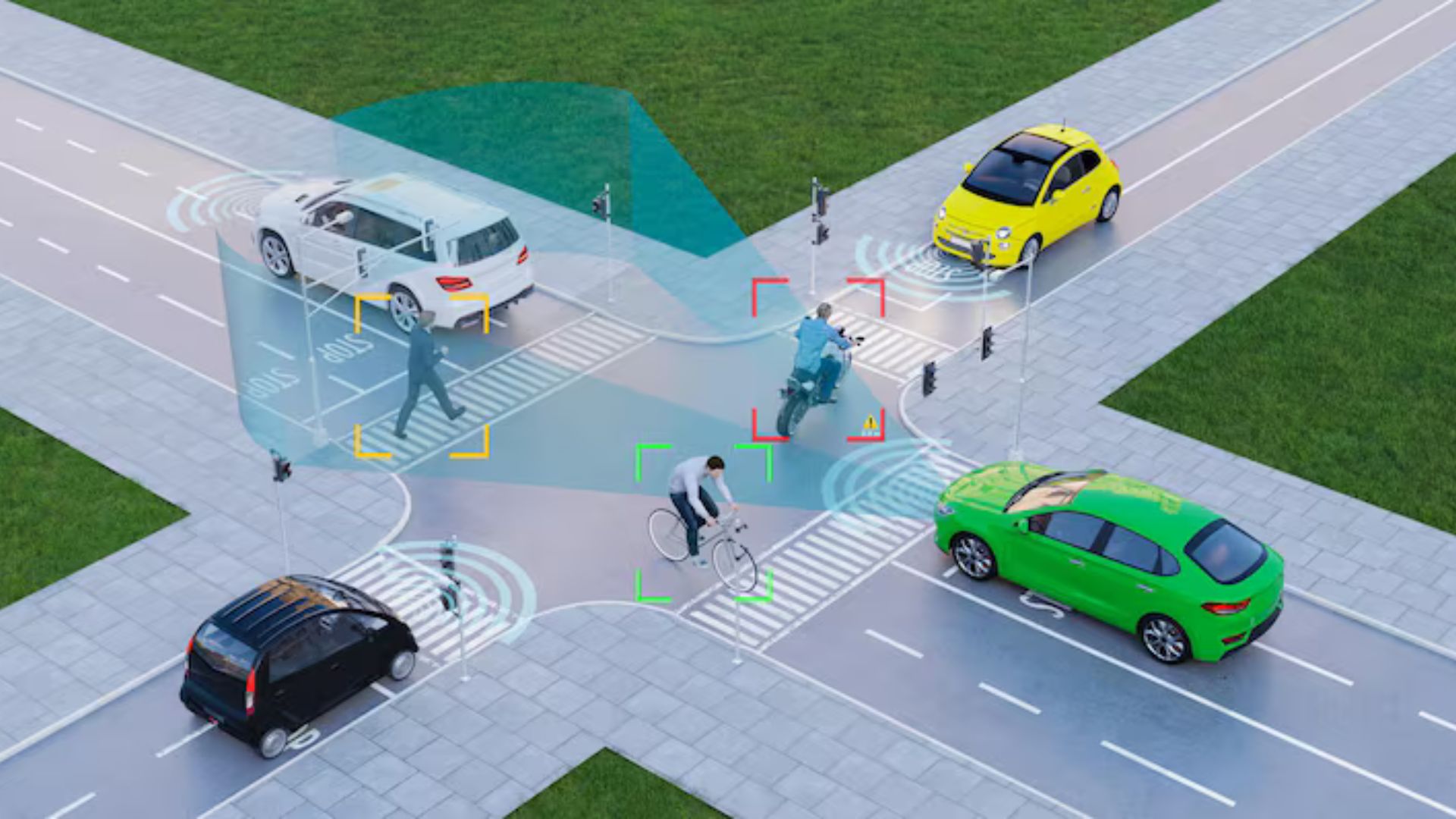
Every smart safety feature has a network of technologies that collaborate with each other. The ADAS built into vehicles constantly assesses the conditions on the road with the help of a series of hardware and software integrated into a vehicle.
Key Technologies Powering These Systems
Sensors
Electromagnetic and ultrasonic sensors are used to determine the things that are near the car, which is particularly helpful on the occasion of low-speed movements, such as parking.
Radar
Radar is a technology that is used to determine the distance and speed of vehicles around. It works with more accuracy even in low-light conditions.
Cameras
Cameras that are positioned strategically identify markings on the lanes, traffic signs, and pedestrians, as well as other vehicles.
LiDAR (in advanced models)
LiDAR makes 3D maps of the surrounding environment of the vehicle extremely accurate and can detect objects with the highest accuracy.
Artificial Intelligence
The immense level of processing, which the AI is able to perform in milliseconds, means that the system can anticipate possible threats and prevent them prior to their happening.
All of these technologies make ordinary cars intelligent machines and are able to help their drivers in complicated situations.
Essential ADAS Features You Should Know
Car manufacturers are quickly introducing smart technology in their luxury and mid-range cars in terms of safety. Knowledge of these capabilities assists the drivers in making wise buying choices.
1. Automatic Emergency Braking (AEB)
This will also notice an impending crash, and in the event that the driver does not react in time, the brakes will be automatically activated.
It especially works well in the prevention of rear-end collisions, one of the most prevalent road accidents.
2. Lane Departure Warning and Lane Keeping Assist
In case a vehicle accidentally slips off its lane, the system notifies the driver. Other cars can steer the car back into its place in a gentle manner.
This greatly enhances safety on the highways and also minimizes driver fatigue in long journeys.
3. Adaptive Cruise Control
This is a feature not found in a normal cruise control, but is an intelligent control that automatically regulates the speed of the vehicle in order to keep a safe distance from the slowed cars in front.
The outcome is a more relaxed and less stressful driving experience, especially in heavy traffic.
4. Blind Spot Detection
Switching lanes will be safer as there will be sensors used to monitor those areas that cannot be seen using mirrors. There are visual or audio signals to alert drivers whenever another car is coming in their direction.
5. Parking Assistance
Close parking requires less time to navigate when they have automated steering control, 360-degree camera shots, and proximity sensors.
It is their first real experience of ADAS convenience for many drivers.
6. Driver Monitoring Systems
Certain cars will even monitor the level of attention by the driver through steering habits and eye movements. In case of indicators of drowsiness or distraction, the system offers the possibility of having a pause.
This forward-looking strategy provides an additional safety cover on long travels.
Benefits of ADAS for Drivers and Passengers
The increased use of smart safety technology indicates its practical benefits.
Enhanced Road Safety
The greatest advantage is the reduction of accidents. ADAS can reduce the number of collisions due to human delay by early detection of the threat.
Reduced Driver Stress
It is psychologically draining to manoeuvre through a heavy traffic jam. Smart assistance functions address repetitive work, and drivers can focus on their work without being overwhelmed.
Lower Insurance Premiums
Insurers are becoming aware of the safety benefits of state-of-the-art driver aid systems. Cars that have such features can be charged with low premiums.
Improved Traffic Flow
In the case of more vehicles responding intelligently to road conditions, the road will have smoother traffic. This will be able to reduce the use of fuel and cut emissions.
Higher Resale Value
The cars that come with modern safety technologies are in high demand and thus are more desirable in the resale market.
At Next Gen Tech Labs, we see this shift as part of a broader movement toward smarter, safer transportation ecosystems.
ADAS vs Self-Driving Cars: Understanding the Difference
The first myth is that the vehicles that use ADAS are completely autonomous. These systems are actually a significant move in that direction in the future; however, they do not displace human drivers.
The automobile industry identifies six automation levels:
- Level 0: No automation
- Level 1: Basic driver assistant.
- Level 2: Partial automation
- Level 3: Conditional automation.
- Level 4: High automation
- Level 5: Full autonomy
The current vehicles are the Levels 1 or 2, where the driver should be involved at all times.
Imagine ADAS as a transitory point between classic driving and autopilot mobility.
Challenges and Limitations
Though these technologies have amazing features, they do not lack in their disadvantages.
Driver Overconfidence
Other drivers are overly dependent on automation because they believe that the car can cope with all situations. Human control is still necessary in safe driving.
Weather Conditions
Cameras and sensors may be blocked by heavy rain, fog, or snow, but this will only destroy the effectiveness of the system temporarily.
Repair and Calibration Costs
Since these systems are based on the use of precise hardware, they incur higher costs when it comes to repairs compared to traditional vehicles.
Learning Curve
Drivers ought to know the working of the safety features of their vehicle. Awareness makes the technology effective to be used effectively.
Despite these challenges, continuous innovation is improving reliability every year.
The Future of ADAS: What to Expect by 2026
The intelligent vehicles of the next generation will be even smarter, faster, and safer.
AI-Powered Predictive Safety
Systems in the future will predict risks earlier than they develop, and the drivers have more time to respond to the risks.
Vehicle-to-Vehicle Communication
Autopilot cars will communicate in real-time on traffic conditions, hazards, and weather conditions, forming a network transportation system.
Greater Accessibility
With increased production, the safety features will be sophisticated, and such features will be increasingly common in both high-end cars and affordable cars.
Progress Toward Autonomy
With every new development, the industry has taken one step closer to fully driving cars. A lot of analysts feel that the process will be faster by the end of the decade.
According to analysts followed by Next Gen Tech Labs, intelligent safety technology will soon become one of the most important factors influencing vehicle purchases.
Why ADAS Matters More Than Ever
There is an increase in urban population, increased congestion of roads, and increased distraction of drivers. Smart help is soon becoming a luxury.
The technology is a step towards proactive defense rather than reactive driving, i.e., vehicles will assist in preventing risks, rather than reacting to them.
The convenience that comes with having a car with modern safety features is not only a decision that is about being more convenient, but it is also a long-term investment in personal and passenger safety for the consumer.
Conclusion
ADAS’s emergence is one of the milestones in the history of automotive innovation. These systems are changing normal cars into supercomputers of safety by integrating artificial intelligence, sophisticated sensors, and real-time analytics.
Although it is still not clear when fully autonomous cars will come to fruition, the technology behind their implementation is starting to make the current driving experience better.
The future of mobility is evident as we head towards 2026: smarter vehicles will characterize the future.
At Next Gen Tech Labs, we believe informed drivers make safer choices. Understanding how ADAS works — and why it matters — empowers you to embrace the next generation of automotive technology with confidence.
The road ahead isn’t just automated.
It’s safer, smarter, and more connected than ever before.