At Next Gen Tech Labs, we explore the technologies shaping tomorrow’s intelligent enterprises. One innovation rapidly redefining how organizations design, operate, and optimize their systems is Digital Twins technology.
The world is becoming more data-driven, automated, and artificial intelligence-driven; physical testing or reactive maintenance is no longer enough to remain viable in the business. They are instead resorting to virtual counterparts that can imitate real-world situations and give practical feedback on matters before problems occur.
A Digital Twin is a changing virtual object, process, or system. These models predict performance, reduce risk, and enhance decision-making by continuously updating using real-time data provided by sensors and connected devices.
Digital twins are becoming an element of digital transformation, whether in the form of smart factories and healthcare systems or energy grids and modern cities. What used to be considered futuristic has become a feasible plan for companies aiming at efficiency, resilience, and innovation.
This in-depth guide from Next Gen Tech Labs explains what Digital Twins are, how they work, their benefits, real-world applications, challenges, and why they are set to become foundational to next-generation industries.
What Are Digital Twins?
Digital Twins are virtual representations that are used to reflect physical assets accurately in real or near real-time. These intelligent models are dynamic, unlike the 3D representations, in that they change continuously as a new stream of operational data enters.
Well, consider it as possessing a living digital equivalent to a machine, a building, a vehicle, or a complete production line. Workers and business executives are able to test, observe behavior, and maximize performance without destabilizing the physical system.
Its premise has accelerated quickly due to the development of cloud computing, artificial intelligence, and the Internet of Things (IoT).
Key Characteristics
- Real-time data synchronization
- The ability of predictive analytics.
- Simulation-driven testing
- Life-long learning based on AI.
- Lifecycle performance monitoring.
Digital Twins can be used to transform organizations that operate in a reactive mode into predictive and smart organizations by bridging the physical and digital worlds.
How Do Digital Twins Work?
To know the workings of Digital Twins, it is important to take a closer look at the technological ecosystem of Digital Twins. These systems are used to convert raw data into valuable operational intelligence.
1. Data Collection
Physical sensors are installed on physical assets and collect data like temperature, vibration, pressure, energy consumption, and operation statistics. This stream of data is constant, whereby the virtual model is always correct.
2. Cloud Integration
The information gathered is sent to secure cloud computing, where it is organized and analyzed. An infrastructure that is scalable enables organizations to handle large amounts of information effectively.
3. Intelligent Modeling
High-fidelity models are high-quality software that can execute simulations. Teams are able to test what-if scenarios to determine how systems behave in various circumstances.
4. AI-Driven Analytics
The machine learning algorithms would examine past and current data to determine patterns. This helps businesses to anticipate failures, enhance product design, and streamline workflows.
5. Continuous Feedback Loop
The knowledge derived through the virtual model can be used to make real-life corrections, and thus, a cycle of continuous optimization can be created.
It is this closed circle that makes Digital Twins much more useful than the old-fashioned monitoring tools.
Core Components Behind Digital Twins
In order to comprehend their influence to the full extent, it is necessary to identify the underlying factors that drive these systems.
Physical Asset
The object in the real world, e.g., a turbine, factory floor, or transportation network, supplies the operational data.
Virtual Model
This computer analogue has a duplication of structure, behavior, and performance. Reliability in the generation of insights requires precision.
Connectivity Layer
With the IoT devices, APIs, and secure networks, there is an easy flow of communication between environments.
Data Platform
Cloud-based architectures maintain and execute information, enabling solutions to expand across ecosystems of enterprises.
Intelligence Engine
Raw data can be unlocked to generate strategic value through AI-powered analytics that transform raw data into predictions and suggestions.
These elements, when combined, will form a living digital environment that will facilitate smarter operations.
Major Benefits of Digital Twins
Organizations that are embracing this technology are experiencing quantifiable benefits that extend well beyond visibility.
Predictive Maintenance
Virtual models identify early warning signs of failure with equipment, minimizing downtime and decreasing the costs of repair.
Better Decision-Making
Strategies can be tried by leaders in a virtual environment with no danger of being applied to the real world.
Faster Innovation
The product teams have a high level of experimentation speed, which reduces the development cycle and time-to-market.
Cost Optimization
The simulation aids in identifying the inefficiencies so as to be able to save the operations in the long term.
Improved Safety
The dangerous situations can be simulated on computers with less exposure to real-life accidents involving human labor.
Sustainability Improvements
To help organizations meet environmental objectives, organizations can maximize the use of energy and resources.
It is these benefits that make analysts view Digital Twins as a strategic investment and not a trial tool.
Real-World Applications Across Industries
The versatility of the technology has made it adaptable in very diverse industries.
Manufacturing
The smart factories exploit virtual simulations to observe production lines, identify bottlenecks, and uphold quality standards. It is possible to simulate layout changes before the actual physical modification.
Healthcare
Healthcare professionals are examining patient-centered modeling, surgical design, and optimization of equipment in order to improve results.
Smart Cities
Urban planners also use data-driven models to operate the traffic systems, utilities, and the development of infrastructure more effectively.
Energy and Utilities
Power providers enhance load prediction, maximize grid reliability, and reduce service interruptions.
Automotive
Automobile designers optimize vehicle design, autonomous pilots, and track fleet performance.
Aerospace
Detailed aircraft are monitored in digital format to make sure they are not faulty and save on maintenance expenses.
With the acceleration in adoption, Digital Twins are starting to be key to large-scale digital transformation projects.
Digital Twins and Industry 4.0
The advancement of interconnected ecosystems has increased the significance of smart virtual modelling. These systems are central intelligence points in Industry 4.0 models that combine information between machines, processes, and supply chains.
By integrating robotics, AI, and IoT, organizations can move beyond automation toward self-optimizing operations — a defining trait of next-generation enterprises highlighted by Next Gen Tech Labs.
Challenges Slowing Adoption
Even though it is promising, implementation is associated with a number of considerations.
High Initial Investment
The construction of correct models needs modern infrastructure, talented expertise, and integration abilities.
Cybersecurity Risks
The fact that these systems are based on interconnected devices makes powerful security systems necessary.
Integration Complexity
Old technologies might have a problem connecting to new platforms.
Data Quality
Mistaken or missing data may undermine the effectiveness of the model.
Luckily, these barriers are gradually reducing as the tools are becoming more mature and less expensive.
Future Trends Shaping Digital Twins
It is highly probable that these virtual systems of the coming decade will become not only working tools but also intelligent strategic advisors.
Autonomous Optimization
Any future platforms can suggest and even implement some operational changes on their own.
Hyper-Personalization
Products and services could be customized on the basis of individualized digital models across consumer-oriented industries.
Immersive Collaboration
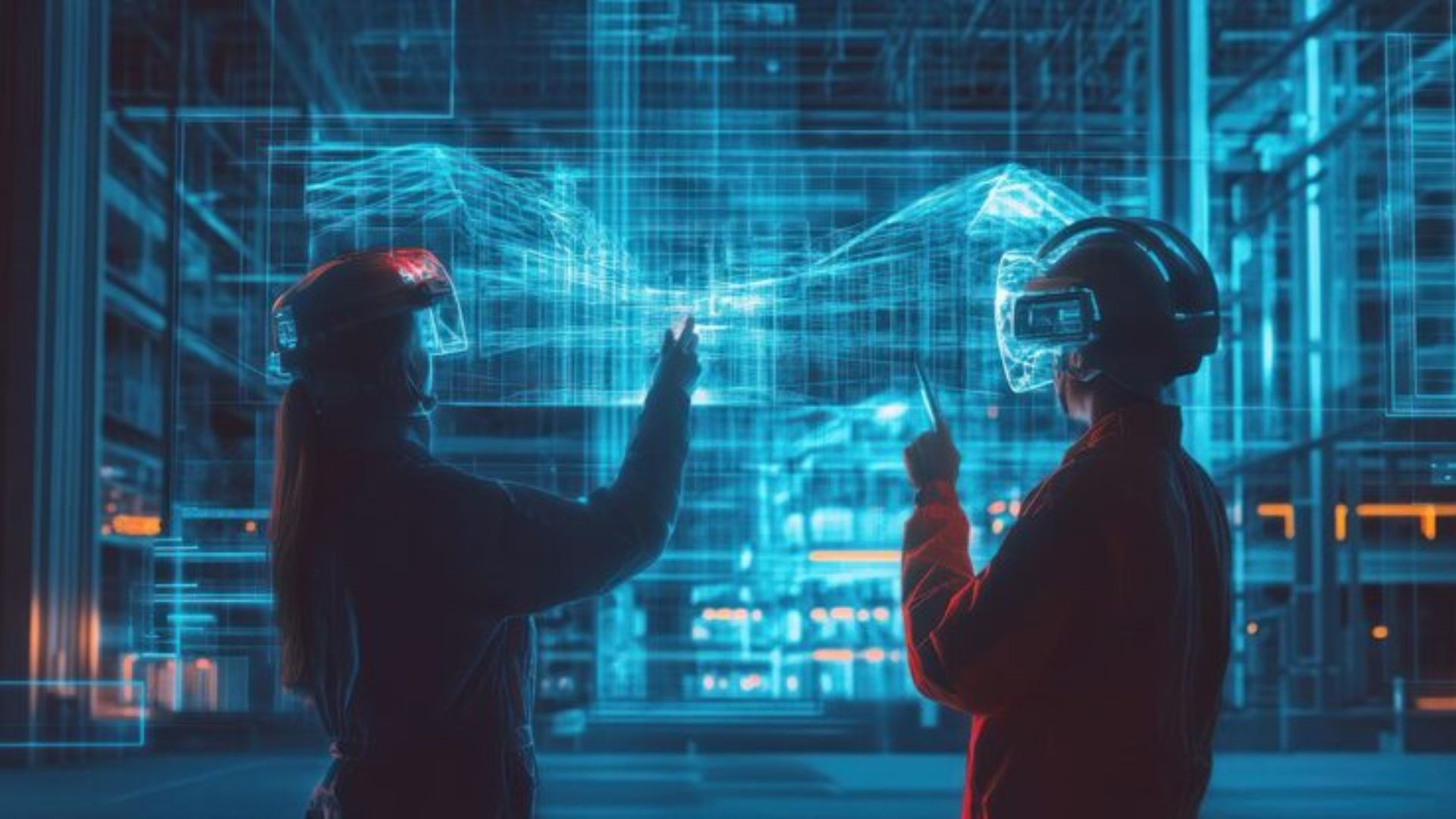
Combination with spatial computing can also allow teams to interact with complicated simulations in a common virtual space.
Enterprise-Level Modeling
Organizations are also shifting to consolidated symbols that reflect whole business ecosystems.
Predictive accuracy will keep rising as the computing power increases.
Why Business Leaders Should Pay Attention
The visionary leaders understand that Digital Twins are not simply a technological upgrade, but they are a competitive advantage.
Early investors are well placed to:
- Innovate faster
- Reduce operational risk
- Enhance customer experiences.
- Scale intelligently
- Be competitive in information-based markets.
Any neglect of this change may force organizations to lag behind smarter firms.
Getting Started: A Practical Approach
Companies planning the adoption should start with a clear roadmap.
Identify High-Value Use Cases
Begin with an area where ROI can be measured, e.g., predictive maintenance or workflow optimization.
Invest in Scalable Infrastructure
Successful deployments are based on cloud platforms and IoT ecosystems.
Strengthen Data Governance
Credible information guarantees reliable information.
Encourage Cross-Functional Collaboration
Effective initiatives must be supported by the coordination of IT, operations, and analytics departments.
With the right strategy, businesses are able to reap long-term value through this fast-developing technology.
Conclusion
With the acceleration of industries to intelligent automation, the Digital Twins are becoming a foundation of the contemporary digital strategy. Through the development of living virtual proxies of physical systems, companies can have unprecedented visibility, prediction, and agility.
The true power of this technology is that it can transform raw data into foresight. Not only will this give companies an opportunity to respond to change, but it can also predict change in advance.
At Next Gen Tech Labs, we believe Digital Twins will soon become standard across forward-looking enterprises. Businesses that embrace this innovation today will be better equipped to innovate, compete, and lead in tomorrow’s connected world.
Digital Twins are not an option in the race towards smarter industries anymore, but the basis of developing resilient, efficient, and future-ready organizations.