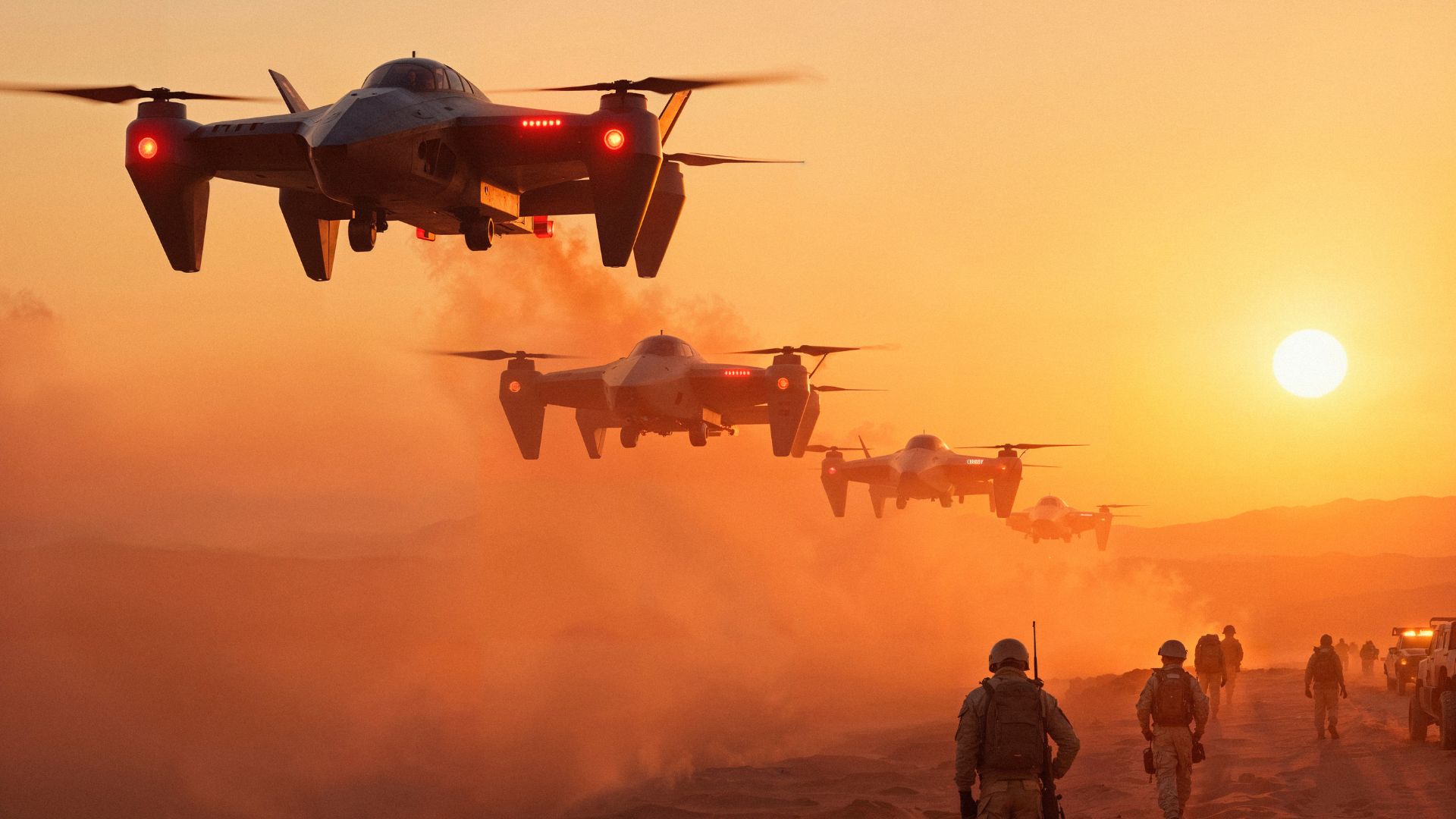
Since the contemporary type of warfare is becoming more dependent on autonomous and data-driven technologies, unmanned aerial vehicles (UAVs) have become an icon of the global defence-related policies. Since carrying out monitoring tasks on the border, precision strike missions, drone technology is changing the nature of defense operations during peacetime and in conflict situations.
At Next Gen Tech Labs, we closely track emerging defence technologies and strategic innovations shaping the future battlefield. One of the most significant developments in recent years is India’s Military Drone Program, which reflects the country’s push toward advanced surveillance, indigenous defence production, and network-centric warfare capabilities.
In the last ten years, India’s Military Drone Program has been transformed into a multi-tiered ecosystem, which encompasses surveillance UAVs, armed combat drones, and precision strike technology. The factors that have pushed this shift are shifting geopolitical realities, rising border security demands, and India’s desire to establish and become a global leader in the field of defence technologies.
Evolution of the Drone Ecosystem in India
The history of India’s Military Drone Program can be dated back to the origin of the military surveillance requirement when the military force adopted UAVs with the primary purpose of intelligence collection and reconnaissance of the battlefield. These were primitive systems that enhanced the monitoring capabilities of India in distant areas and critical frontiers.
With the growth of operational needs, India’s Military Drone Program started to include the longer-endurance platforms with the ability to monitor the situation on high altitudes, patrol the water areas, and transmit the information in real-time. Attention started to be paid to local research and collaboration programs.
The Military Drone Program of today in India highlights:
- Ethnic design and production.
- Integration of Army, Navy, and Air Force operations.
- Targeting and AI-assisted surveillance.
- Precision engagement capabilities
This change is a strategic transformation of technological self-reliance and operational flexibility.
Surveillance UAVs: Enhancing Situational Awareness
One of the pillars of India’s Military Drone Program is its surveillance UAVs. These technologies give real-time intelligence and constant surveillance in such harsh conditions as mountainous boundaries, deserts, and marine areas.
Key Roles
Surveillance platforms within India’s Military Drone Program support:
- Real-time monitoring of the border and intrusion detection.
- Reconnaissance missions at a high altitude.
- The Indian Ocean region Maritime security.
- Disaster monitoring and search activities.
Technology Integration
Modern UAVs deployed under India’s Military Drone Program include:
- Thermal imaging sensors and electro-optical sensors.
- All-weather tracking, Synthetic aperture radar.
- Safety victims of the communication satellite.
- Computerized object recognition software.
Through these technologies, defence forces are able to have continuous visibility and make quicker operational decisions.
Combat Drones: Expanding Tactical Reach
The second stage of modernization is the use of armed UAVs that will be able to perform the targeted operations. The inclusion of combat platforms has greatly increased the operational range of the Military Drone Program promoted by India.
Operational Advantages
The Combat drones also enhance India’s Military Drone Program by empowering:
- Precision threat targeting of high-value threats.
- Intimate support to surface operations.
- Less risk to the pilots and the staff.
- Constant pre- and post-engagement monitoring.
These platforms give a solution to surveillance and strike, enhancing the efficiency of the missions and the speed of response.
Indigenous Innovation
Domestic defence research agencies and private-sector firms are accelerating the development of:
- Long-endurance armed UAVs
- Unmanned combat systems that can be stealthy.
- Independent navigation and control software.
- Swarm drone technologies
These assist in strengthening India’s Military Drone Program, even as it aids in the overall objective of defence self-sufficiency.
Precision Strike Systems and Smart Warfare
One of the characteristic features of modern unmanned warfare is the ability to link surveillance directly to precision engagement. This ability is becoming the core of India’s Military Drone Program, which allows quick intelligence-to-action response.
Benefits of Precision Strike Drones
Accurate platforms within India’s Military Drone Program are offering:
- Large targeting precision and minimum collateral effects.
- Live-time intelligence feedback loops.
- Reduced operational cost in comparison to traditional air missions.
- Long-distance capabilities with long missions.
The combination of smart munitions and AI-guided targeting programs makes such drones capable of performing their tasks in a complicated operating environment.
Role in Network-Centric Defence Strategy
Modern defence operations rely heavily on interconnected systems sharing data in real time. India’s Military Drone Program contributes significantly to this network-centric framework.
Through advanced communication and battlefield integration, drones can:
- Transmit real-time intelligence to command posts.
- Communication with satellites and aircraft.
- Precision Data Support artillery fires.
- Deliver live situational maps to the field units.
This linked endeavor enables India’s Military Drone Program to operate as an intelligence platform, as well as an operational force multiplier.
Strategic Importance for National Security
In addition to the tactical missions, India’s Military Drone Program is a wider application of supporting the national security and strategic deterrence.
Border Management
Continuous UAV surveillance enhances the effectiveness of surveillance and reactionary ability, and therefore, India’s Military Drone Program is essential in ensuring border defense.
Maritime Surveillance
As the maritime roles increase, India’s Military Drone Program improves the surveillance of the sea routes, naval, and offshore infrastructure.
Counter-Terrorism Capabilities
Accurate intelligence collection and precision strike options enable India’s Military Drone Program to support targeted counter-terror operations with minimal escalation risks.
Industry Growth and Defence Startups
The growth of India’s Military Drone Program has created new possibilities for defence startups, research and development teams, and individual manufacturers.
Collaborative initiatives are advancing:
- Portable drone materials and designs.
- Obtain encrypted communication systems.
- Artificial intelligence, automation, and analytics.
- Cutting-edge propulsion and endurance technologies.
These alliances guarantee innovation and technology competitiveness.
Challenges and Future Outlook
Nevertheless, even with such rapid growth, India’s Military Drone Program continues to struggle with issues such as reliance on supply chains, threats of electronic warfare, and the necessity of integrated service command protocols.
Nevertheless, the future of India’s Military Drone Program is very bright. Future research and development can involve:
- Swarm drone deployment Autonomously.
- The next generation of UAVs stealth technology.
- AI-based battlefield decision support systems.
- Interconnection to space-based surveillance systems.
These technologies are also likely to be a foundation of the future defence architecture in India as they mature.
Conclusion
The blistering development of unmanned technologies indicates a new stage of the modernisation of defence. India’s Military Drone Program represents the development of a trend wherein surveillance UAVs are replacing the precision strike platforms, and their use is transforming the operational strategy and national security preparedness through the use of technological innovation.
As highlighted by defence technology insights from Next Gen Tech Labs, continued investment in research, indigenous manufacturing, and advanced AI integration will ensure that India’s Military Drone Program remains a decisive strategic asset. With expanding capabilities and growing domestic innovation, the program is poised to play a crucial role in strengthening India’s defence posture for decades to come.