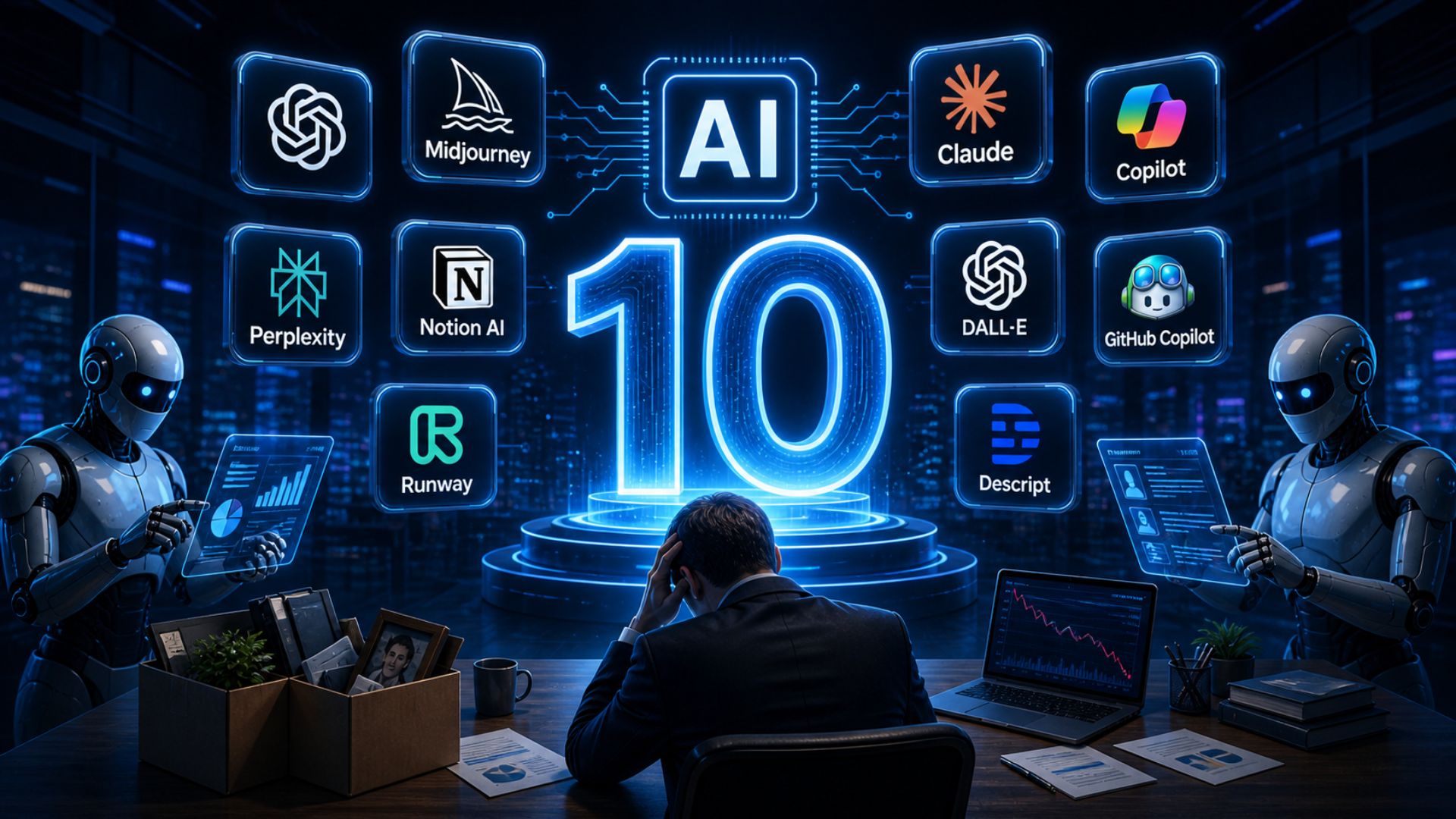
AI is developing at a rapid rate. Today, technology is changing the world around us – from smart assistants to recommendation algorithms, self-driving cars to AI chatbots. Experts say this is just the start of a bigger revolution — Artificial General Intelligence.
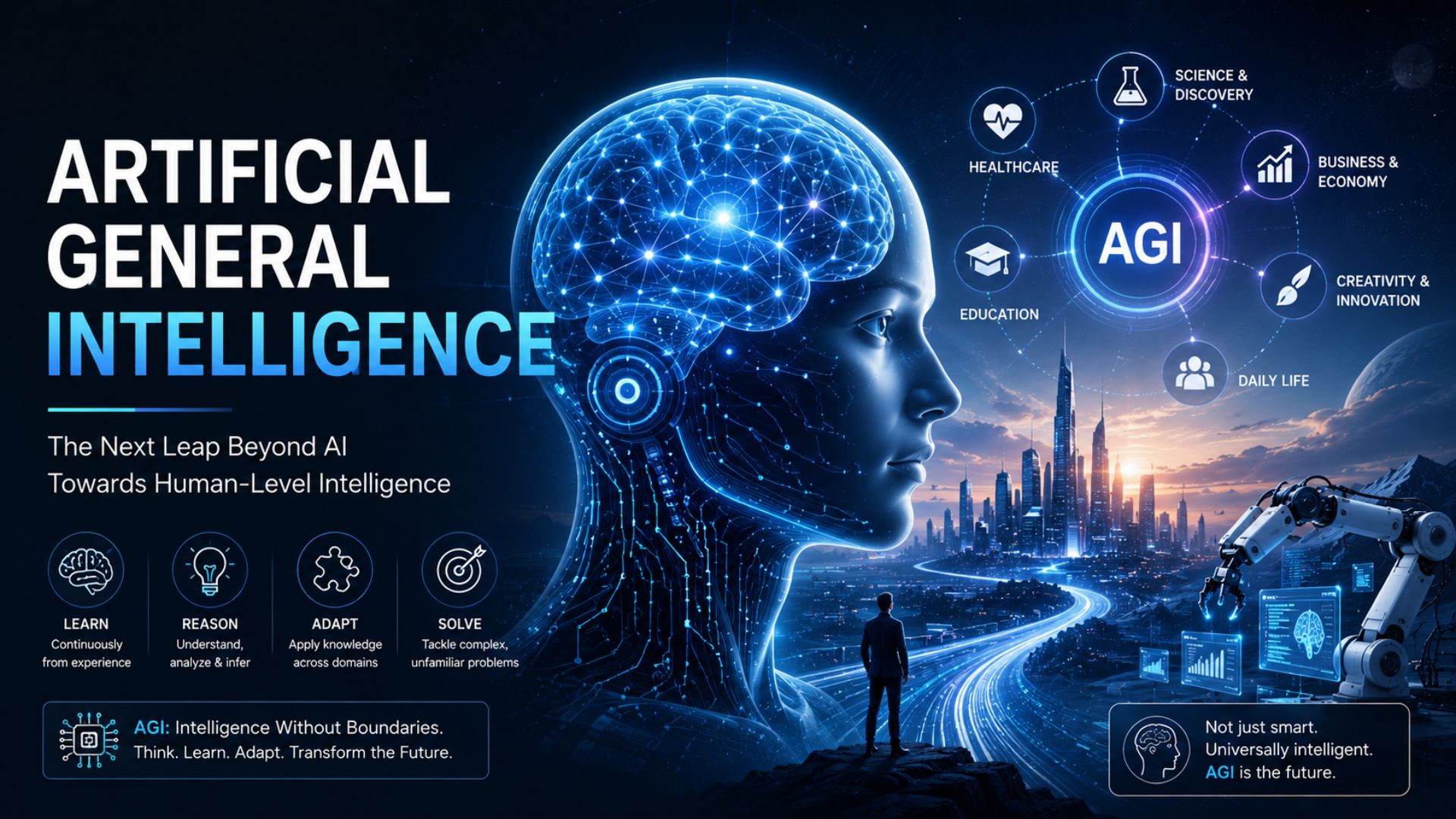
Artificial General Intelligence (AGI) is different from the narrow, task-specific intelligence that exists in most AI systems in that it is supposed to be able to learn, reason, and adapt in a number of different fields, much like a human. The tech giants, including OpenAI, Google DeepMind, Microsoft and NVIDIA, are spending billions of dollars on AGI research, as many believe it may be the most significant technological leap in history.
We closely monitor and keep up-to-date on the latest technologies that are creating a future for humanity at NextGenTechLabs. The journey towards the creation of Artificial General Intelligence, which potentially has the power to reshape industries, occupations, business practices, health care, education, and even daily living itself, is one of the most thrilling developments in the near future.
We’ll delve into the meaning of AGI, its difference from existing AI models, the companies at the forefront of the AGI revolution, the potential opportunities and threats of this groundbreaking technology, and the impact that AGI might have on the world. We’ll discuss what AGI means, how it is different from today’s AI systems, the companies leading the charge on the AGI front, the possibilities and dangers of this revolutionary technology, and how AGI might change the world forever.
What is Artificial General Intelligence?
In Artificial General Intelligence, the artificial intelligence is able to execute intellectual tasks at the same level as human. AGI is not just narrow AI, which is limited to a specific task, but it can pick up new skills, solve new problems, make logical inferences, and learn on its own.
For example:
- The chatbot can respond to inquiries.
- One of the AI tools for images can create art.
- An AI navigation system can navigate vehicles.
But these systems are rather autonomous, and they are not able to think much beyond their respective tasks. The goal of Artificial General Intelligence is to integrate all these features into an all-encompassing AI system that can perform a wide range of tasks concurrently.
Researchers think that in the future AGI systems would have capabilities like:
- Human-like reasoning
- Context awareness
- Problem-solving
- Creativity
- Self-learning
- Decision-making
- Emotional understanding
The march toward Artificial General Intelligence (AGI) is seen as the next giant step in the advancement of AI.
Difference Between Traditional AI and AGI
Many people think that the existing AI systems are already AGI. In actuality, the current use of AI is quite limited.
Narrow AI
Narrow AI is a focus on specific-purpose tasks like:
- Language translation
- Search engines
- Recommendation systems
- Voice assistants
- Facial recognition
These systems are strong, but cannot learn new skills that are unrelated to the rest of the skill set.
Artificial General Intelligence
AGI would act as the human mind, however. It could:
- Gain new skills and knowledge without a retraining program
- Use and transfer knowledge to other areas
- Solve unfamiliar problems
- Understand broader contexts
- Be flexible in adapting to changes in circumstances
One such AGI system may be able to code, diagnose diseases, compose music, research and run businesses, and all without having to utilize distinct AI models.
That’s the reason why Artificial General Intelligence is such a revolutionary idea.
Why Artificial General Intelligence Matters
The effects of the Artificial General Intelligence would out strip all previous technological revolutions.
We at NextGenTechLabs envision a transformation of society with the advent of AGI in a few ways.
1. Scientific Breakthroughs
AGI might speed up the progress in the following areas:
- Medicine
- Climate science
- Space exploration
- Renewable energy
- Biotechnology
AGI can analyze vast amounts of data and detect patterns and trends that humans might miss and could prove useful in solving complex problems.
2. Smarter Automation
So far, automation is largely used to automate repetitive work. AGI would be able to do cognitive tasks that involve reasoning and intelligence automatically.
Examples include:
- Legal analysis
- Financial forecasting
- Medical diagnostics
- Advanced programming
- Strategic business planning
3. Economic Transformation
AGI would enable businesses to run more efficiently than ever before. Industries can see an improvement in productivity and in operating costs.
Technologies Behind Artificial General Intelligence
The creation of Artificial General Intelligence (AGI) is still one of the most significant problems in computer science. Multiple advanced technologies are being brought together to advance towards AGI.
Machine Learning
With machine learning, AI systems can learn from data patterns and enhance their performance as they go.
Neural Networks
Neural networks are modeled after the human brain which are the basis of the modern AI systems.
Large Language Models
Challenging language models such as GPT are a first step towards more general reasoning abilities that are inherent to AGI.
Reinforcement Learning
This approach enables AI systems to adapt and learn from their experiences, enhancing their decision-making capabilities.
Multimodal AI
New systems that use AGI are likely to bring together:
- Text understanding
- Image recognition
- Audio processing
- Real-world reasoning
This can help improve the human-like interactions of AGI systems.
Companies Leading the AGI Race
There are several technology companies that are trying to ‘battle it out’ to create Artificial General Intelligence.
OpenAI
OpenAI has clearly outlined its vision of building safe AGI systems for the benefit of humankind as a long-term goal.OpenAI has proudly declared that its long-term goal is to build safe AGI systems for the benefit of humankind.
Google DeepMind
Google DeepMind is pursuing groundbreaking research in AI that involves reasoning, robotics and scientific discovery.
Microsoft
Microsoft remains a big spender on AI infrastructure and enterprise AI technologies.
NVIDIA
NVIDIA is the manufacturer of GPUs and AI hardware that are used in a variety of high-powered AI systems globally.
Anthropic
Anthropic is dedicated to building safe and aligned AI models, which could one day turn into AGI systems.
We’re convinced that the battle for AGI supremacy between these companies will define the next generation of world-leading technology at NextGenTechLabs.
Artificial General Intelligence and the Future of Jobs
The impact on jobs is one of the main debates regarding AGI.
Jobs That Could Be Automated
AGI can be used to automate a lot of knowledge based jobs, such as:
- Customer support
- Data analysis
- Content generation
- Basic coding
- Administrative work
New Career Opportunities
Concurrently, AGI may spawn new industries and jobs including:
- AI governance
- Robotics engineering
- Human-AI collaboration
- AI ethics consulting
- AGI safety research
NextGenTechLabs says that flexibility and lifelong learning will be crucial skills in the future economy fueled by the advent of Artificial General Intelligence.
Possible threats and difficulties of Artificial General Intelligence
While Artificial General Intelligence has a great potential, it also has serious concerns.
Ethical Concerns
As AI systems grow more advanced, so does the complexity of privacy, bias, accountability, and AI rights issues. As AI systems become more advanced, so does the complexity of privacy, bias, accountability, and AI rights issues.
Security Risks
There are some potential ways that powerful AGI systems can be used in ways that are harmful:
- Cyberattacks
- Mass surveillance
- Autonomous weapons
- Manipulation campaigns
Loss of Human Control
There are concerns that at some point, the more sophisticated AI systems might become too complex to comprehend or manage by humans.
That’s why it is essential to take the study of AI safety more seriously.
Difference Between Artificial General Intelligence and Superintelligence
It is important to note that many confuse the terms “AI” with “ASI” (Artificial Superintelligence), whereas they are two distinct ideas.
AGI
AGI is able to carry out intellectual tasks with a human-like level of ability.
ASI
Artificial Superintelligence would be better at practically anything than humans, such as:
- Science
- Creativity
- Strategy
- Emotional intelligence
Some researchers think that the one day AGI might be able to self-improve to become superintelligent.
When Will AGI Become Reality?
The timeline for the realization of AGI is not agreed upon.
Predictions vary widely:
- There are some experts who think that AGI will be possible within the next ten years.
- Others believe that they are several decades old.
- However, some researchers say it is not possible to achieve true AGI.
But, the progress of AI models, robotics, cloud computing, and neural networks indicates that the path towards AGI is rapidly progressing.
We are convinced that the development of AGI will be one of the key technology races of the 21st century at NextGenTechLabs.
Potential impact of AGI on daily life
The potential that is created with AGI may be massive.
Potential applications include:
- Personalized AI assistants
- Real-time healthcare diagnostics
- Fully autonomous transportation
- Advanced virtual teachers
- AI-powered scientific research
- Intelligent business management systems
Eventually, future AGI systems could be fully integrated into various environments and situations, such as in homes, workplaces, education, and healthcare systems globally.
Ethical Issues that Society Must Answer
With the evolution of AGI, there are a number of significant issues governments and organizations must ask themselves:
- Who will control the AGI systems?
- Should there be legal protection for AGI?
- What can be done to stop misuse?
- What restrictions need to be put in place?
- What is the way to keep AGI in line with human values?
This is already on the minds of the global tech community.
The development of an AI that can be trusted will take international collaboration between governments, researchers, and technology firms to achieve. Responsible development of AGI will need international cooperation between governments, researchers and tech firms, which is where NextGenTechLabs comes in.
Future of Artificial General Intelligence
There are many great possibilities as well as potential dangers to the future of Artificial General Intelligence.
AGI could potentially:
- Accelerate scientific discoveries
- Improve global healthcare
- Increase economic productivity
- Craft strategies to address key issues around the world
- Transform human civilization
But it will be just as critical to ensure that AGI can be used for the benefit of humanity without causing harm and in an ethical manner.
Over the next decade, intelligent systems that can think, learn and reason like humans will make their mark on society.
Conclusion
The aspiration in developing Artificial General Intelligence is one of the loftiest aspirations of human beings. Whereas the traditional AI systems are designed to perform specific tasks, AGI hopes to achieve human level intelligence in a wide variety of areas.
The emergence of various companies, such as OpenAI, Google DeepMind, Microsoft, and NVIDIA, is a major breakthrough in developing technologies that could be used to create a true AGI system. Benefits range from scientific discoveries, economic change, advanced automation and even industry revolution.
Meanwhile, there are complex ethical, social and security issues that can’t be ignored when it comes to AGI.
We, at NextGenTechLabs, see it as crucial to be informed of technologies that are starting to emerge to be ready for the future – like AGI. Regardless of when AGI is obtained, in 10 or 30 years, the implications could have a profound impact on human life, labour, education, and technology.
What we know for sure is that increasing development of Artificial General Intelligence is not a science fiction anymore, it’s one of the most significant technological advancements of our generation.