Wars of today are not the same as they have been in the past. Current military triumph relies on cutting edge technologies that can manage communications networks, radar, drones, and electronic infrastructure. Electronic Warfare Systems are one of the most important defense technologies globally, where they assist armed forces to control the electromagnetic spectrum and to interfere with the actions of the enemy without engaging them directly in combat.
In recent years, countries have reallocated resources to the field of electronic warfare, increasing their investment in the technology in response to the growing geopolitical tension and the development of electronic warfare in the cyber space. In warfare, Electronic Warfare Systems can be used to jam enemy radar, disrupt enemy communications and UAVs, and boost the overall security of military targets, enabling them to outmaneuver enemy forces and maintain their operational advantage.
NextGenTechLabs is keenly tracking the latest in defense technologies making their way into the military’s land, air, sea, cyber and space operations. As an example of the evolution of advanced electronic warfare solutions, consider how technology is becoming the backbone of modern national security strategies.
This book examines the operation of Electronic Warfare Systems, their major components, their use in the real world, their strategic benefits, future trends and why modern armed forces are increasingly relying on them for mission success.
Electronic Warfare (EW) Systems: What They Are
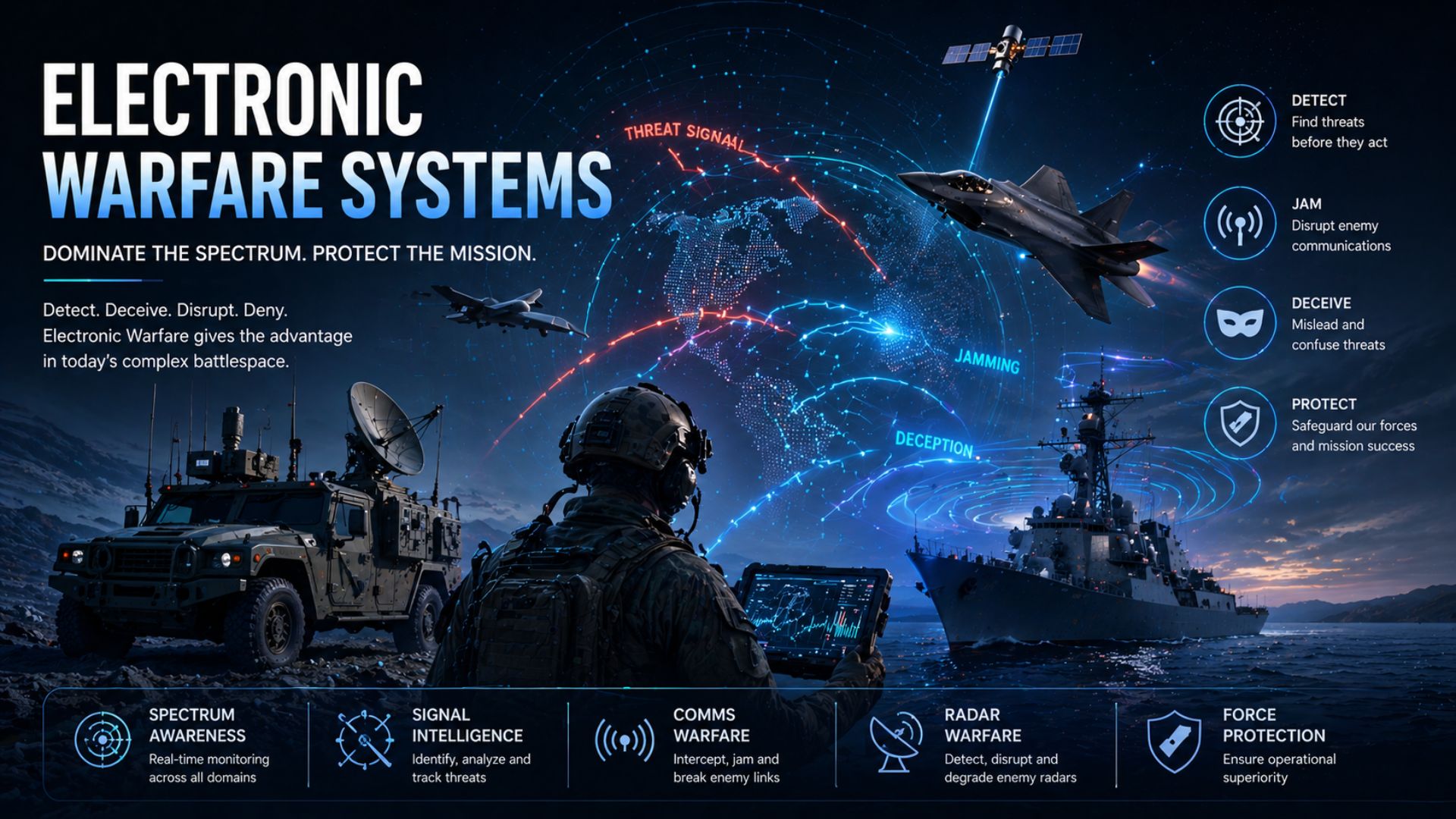
Electronic Warfare Systems are military systems that are used for purpose of controlling, manipulating, and dominating the electromagnetic spectrum during a military operation. They can provide detection, interception, jamming, deceptive and disrupting capabilities of enemy communications and radars, and can also defend friendly military networks.
The electromagnetic spectrum consists of:
- Radio frequencies
- Radar signals
- Satellite communications
- GPS transmissions
- Wireless data channels
- Infrared frequencies
Controlling the spectrum is an important operational advantage due to the importance of these signals in modern defense infrastructure.
At NextGenTechLabs, the specialists believe that in the future, war will be won more by intelligent electronic domination and not just by conventional weapons.
The heat of electronic warfare is core objectives
Modern Electronic Warfare Systems evolve with a number of strategic goals:
- Intercept enemy communications
- Prevent enemy radar systems from functioning.
- Take care to secure allied military communications.
- Gather battlefield intelligence
- Stop missiles from being guided.
- Defend against Unmanned Aerial Threats
- Improve battlefield awareness
The ability of military commanders to cut the coordination time of enemies and enhance the efficiency of military operations in complex combat situations.
Numerous different kinds of Electronic Warfare Systems are available
There are three principle categories of military electronic warfare (EW) operations.
1. Electronic Attack (EA)
Electronic Attack refers to offensive actions that interfere with or disrupt enemy systems by means of electromagnetic energy. One of the most aggressive uses of Electronic Warfare Systems.
Common Electronic Attack Techniques (CEAT):
- Communication jamming
- GPS disruption
- Radar deception
- Signal interference
- Drone communication blocking
For instance, jamming systems can be employed to mislead enemy missile systems and prevent detection during missions on military aircraft.
2. Electronic Protection (EP)
Electronic Protection is the protection of friendly systems from enemy electronic attack. Advanced Electronic Warfare Systems are equipped with defense capabilities which ensure secure communication even in worst case scenarios of high interference.
Electronic Protection Methods:
- Frequency hopping
- Encrypted communications
- Anti-jamming technologies
- Secure tactical networks
- Shielded communication systems
These technologies will provide continued coordination among military units in hostile environments.
3. Electronic Support (ES)
Electronic Support is the acquisition of intelligence through surveillance of enemy electronic transmissions. This function aids military forces to know potential threats and the movement of the enemy.
Electronic Support Functions:
- Signal interception
- Radar monitoring
- Threat identification
- Communication analysis
- Surveillance operations
Analysts at NextGenTechLabs see Electronic Support as an essential part of the contemporary intelligence-enabled warfare.
How electronic warfare systems can disrupt enemy communications
Disruption of enemy communication infrastructure is one of the key roles of Electronic Warfare Systems. Wireless communication networks are used extensively for command coordination, intelligence sharing, navigation and execution of combat missions in modern military forces.
The disruption of these channels can have a major impact on the effectiveness of the enemy.
Signal Jamming
Signal jamming is one of the common methods used in modern warfare. It operates by broadcasting strong electromagnetic waves which drown out enemy signals.
Types of Signal Jamming:
- Spot jamming
- Sweep jamming
- Barrage jamming
- Deceptive jamming
Jamming operations can disable:
- Tactical radios
- GPS navigation systems
- Satellite communications
- Drone controls
- Battlefield communication networks
Electronic Warfare Systems are crucial in high-intensity military scenarios due to these capabilities.
Radar Interference
Enemy radar systems play a key role in air defence, surveillance and missile targeting. The advanced electronic warfare platforms are capable of disrupting the radar signal and even mimicking a target.
This enables aircraft and ships to be more survivable in hostile territory.
Cyber-Electronic Integration
In the current times, cyber warfare and Electronic Warfare Systems are being used together in modern defense strategies. This integration boosts military capabilities and goes after both digital infrastructure and communication networks at once.
Examples Include:
- Disabling military servers
- Corrupting navigation software
- Interrupting command systems
- Hijacking drone communications
NextGenTechLabs researchers note that cyber-electronic integration is what will shape the future of defense operations.
Major components of electronic warfare systems
For Advanced Electronic Warfare Systems to function effectively, they utilize very specific hardware and software technologies.
Antenna and Signal Receivers design.
These are capable of picking up enemy transmissions in several frequency bands. Today’s receivers are able to survey broad portions of the electromagnetic spectrum in real time.
Signal Processing Units
The signal processors interpret the information they collect and categorize the possibilities for threat. These systems are becoming more and more intelligent with AI for quick decision-making.
Jamming Equipment
Jamming devices are tools that produce electromagnetic interference to block unwanted signals. They can be installed on airplanes, naval vessels, armored vehicles or drones.
Direction-Finding Technology
Direction-finding systems determine the direction from which the enemy signal originates to allow precise monitoring and targeting of enemy signals.
Electronic Countermeasure Pods
To protect military aircraft from radar-guided missile systems and hostile tracking technologies, they often carry pods that are specially designed for them.
Modern Armed Forces Applications of Electronic Warfare Systems
Air Warfare Operations
Electronic Warfare Systems are used by air forces to safeguard their fighter jets, bombers, and surveillance aircraft from enemy air defense.
Airborne Applications:
- Radar suppression
- Missile defense
- Communication disruption
- Stealth enhancement
These types of missions are a specialty of aircraft such as electronic attack fighters.
Naval Defense Operations
Anti-ship missiles and enemy electronic warfare systems are a significant threat to naval forces, and modern EW systems play a crucial role in mitigating these risks.
Naval Capabilities Include:
- Radar deception
- Electronic decoys
- Missile defense support
- Communication interception
Naval electronic warfare technology is getting more sophisticated, according to maritime defense analysts at NextGenTechLabs.
Ground Warfare Applications
Mobile electronic warfare units are deployed by ground forces, they are used to jam enemy tactical communications and drone activity.
Land-Based Applications:
- Counter-drone operations
- Tactical signal disruption
- Battlefield surveillance
- Counter-IED support
In an urban warfare situation, these capabilities can be especially useful.
Space and Satellite Defense
Satellites are important in today’s military communication and navigation. AEWS can disrupt satellite transmissions and GPS operations.
Space electronic warfare has become an important area of strategic significance for the military as their reliance on space-based infrastructure increases.
Artificial Intelligence/Electronic Warfare
Military defense technologies are undergoing a rapid transformation with the help of Artificial Intelligence. An Artificial Intelligence (AI) based Electronic Warfare System can analyze a huge volume of signals far more quickly than a human operator.
AI Applications in Electronic Warfare:
- Automated threat detection
- Adaptive signal jamming
- Real-time analysis
- Autonomous response systems
- Predictive battlefield intelligence
The experts at NextGenTechLabs believe that AI electronic warfare will dramatically alter the battlefield’s dynamics in the years to come.
Counter-Drone Capabilities
Advanced Electronic Warfare Systems are gaining in demand as the use of drones in combat continues to grow. Drones are extremely susceptible to electronic interference as they are dependent on wireless signals and GPS.
Counter-Drone Techniques:
- GPS spoofing
- Communication jamming
- Signal interception
- Drone takeover technologies
Such systems are now a critical requirement to secure military sites and critical infrastructure.
The Electronic Warfare Systems Challenges
Electronic warfare operations are effective, but there are a number of operational problems.
Spectrum Congestion
Civilian and military communication technologies have made the electromagnetic spectrum more and more crowded.
Rapid Technological Advancement
Every enemy country is creating new communication systems and defense mechanisms, leaving new technologies always to be upgraded.
Cybersecurity Risks
Many Electronic Warfare platforms are software-based and are therefore susceptible to cyberattacks and attempts at digital infiltration.
Signal Complexity
Effective and successful interception and analysis of modern encrypted communication systems is increasingly challenging.
The current research efforts at NextGenTechLabs are focused on enhancing adaptive signal intelligence and next generation threat detection systems.
The next generation in electronic warfare
There are technologies in the field of electronic warfare that will have a major impact for the future of military defense technology.
Cognitive Electronic Warfare
The cognitive systems learn from battlefield changes and enemy tactics so as to autonomously adjust.
Quantum Communication Technologies
In the next decade or so, Quantum technologies could change the way military communications and signal detection are done.
Directed Energy Weapons
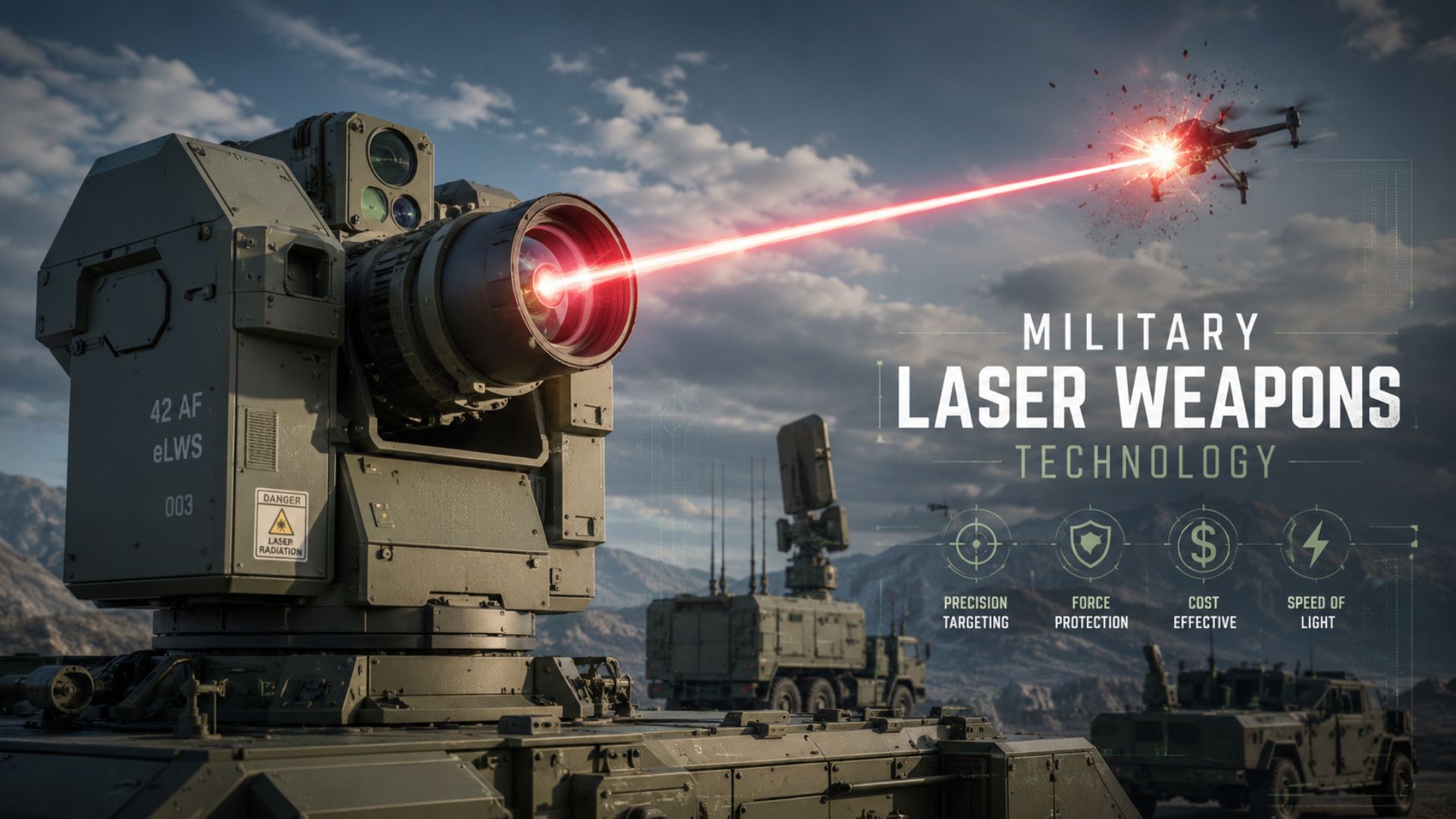
It’s expected that high-power microwave and laser systems will also be combined with future electronic warfare platforms.
Autonomous Electronic Warfare Platforms
UAVs with intelligent electronic warfare will conduct reconnaissance, surveillance and jamming operations with minimal human interaction.
In the field of autonomous warfare, NextGenTechLabs innovation teams still need to understand how it will impact future defense ecosystems.
The Significance of Electronic Warfare in National Security
Today’s militaries know that they must have control over the electromagnetic spectrum to be successful on the battlefield. Electronic Warfare Systems are now recognized as strategic defense and not just a supporting technology.
In the following areas, nations having advanced electronic warfare capabilities would be at a great advantage:
- Intelligence gathering
- Missile defense
- Tactical coordination
- Cyber warfare integration
- Border security
- Space operations
The increased significance is the reason defense companies around the world continue to invest heavily in developing cutting-edge military technologies.
Conclusion
It is crucial that Electronic Warfare Systems technology is one of the most critical technologies in current defense operations, especially given the digital nature of war. These systems can be used to jam enemy communications, disable their radar systems, secure strategic assets and control the electromagnetic spectrum without directly engaging in combat.
Electricity, radio, and other types of warfare are becoming a central part of military operations in all domains, ranging from air combat to naval defense, cyber-integrated missions, and counter-drone operations.
We at NextGenTechLabs feel the future of warfare will be more and more defined by the intelligent electronic dominance using autonomous systems, artificial intelligence and next generation communication technologies. Advanced electronic warfare capabilities will give countries a strategic edge in the future and countries that invest in these will have the edge in future conflicts.
As Electronic Warfare Systems become a more significant part of military operations, it becomes crucial for defense professionals, technology innovators, and organizations to grasp this new dimension of warfare and ensure they remain ahead of the curve in a rapidly changing world of modern military technology.