The automotive industry is undergoing a rapid transformation with sophisticated connectivity systems, which are revolutionizing modern transportation. Vehicle to anything technology is one of the most innovative technologies in this field, which involves smart communication between vehicles, infrastructure, and pedestrians and between vehicles and networks in real time. This innovation is transforming the way people drive, enhancing road traffic safety and developing smarter transportation systems globally.
We at NextGenTechLabs know that connected mobility will shape the future of mobility. Today’s vehicles aren’t merely “machines” anymore; they’re intelligent systems that can communicate with one another, instantly, to avoid collisions, alleviate traffic jams, and enhance driving efficiency. Vehicle to everything technology enables cars to communicate with each other and to other services about traffic, weather, braking, road hazards and more, before drivers ever see them visually.
Automotive manufacturers, governments, and smart city developers are spending a lot of money on the connected transportation ecosystem. With the advent of AI, IoT devices and 5G connectivity, the whole vehicle to everything technology is gaining momentum in global markets. In an increasingly automated and data-driven transportation system, connected communication systems will be important in improving the mobility experience.
NextGenTechLabs discusses the inner workings of this cutting-edge communication system, its primary advantages, applications, obstacles, and the future implications it will have for smart transportation and autonomous driving in this blog.
What is Vehicle to Everything (V2X) Technology?
The Vehicle to Everything (V2X) technology is a communication infrastructure designed to enable vehicles to share real-time data with the surrounding elements in the transportation system. They encompass the surrounding traffic, transportation systems, walkers, mobile networks, cloud systems, and smart traffic systems.
Vehicle to everything technology is intended to make safer, smarter and more efficient roads. The immediate communication allows vehicles to make intelligent decisions rapidly, thus minimizing risks that could be due to slower human responses.
This innovation is crucial for the future of autonomous transportation systems and smart cities at NextGenTechLabs.
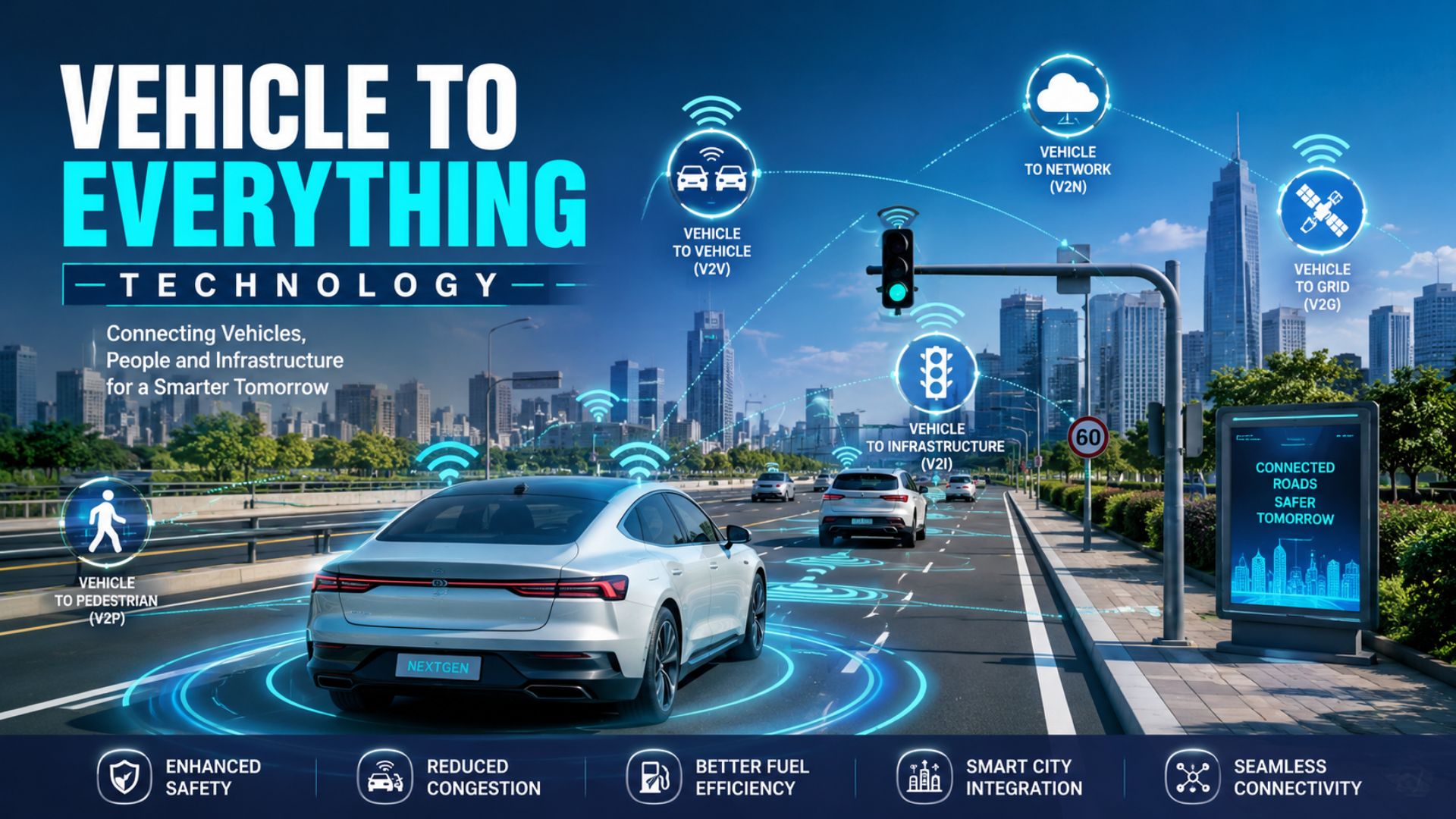
Main Types of V2X Communication
1. Vehicle-to-Vehicle (V2V)
Vehicle-to-Vehicle communication enables the exchange of vehicle data: speed, location, direction and braking activity. This helps avoid collisions and helps to raise driver awareness.
2. Vehicle-to-Infrastructure (V2I)
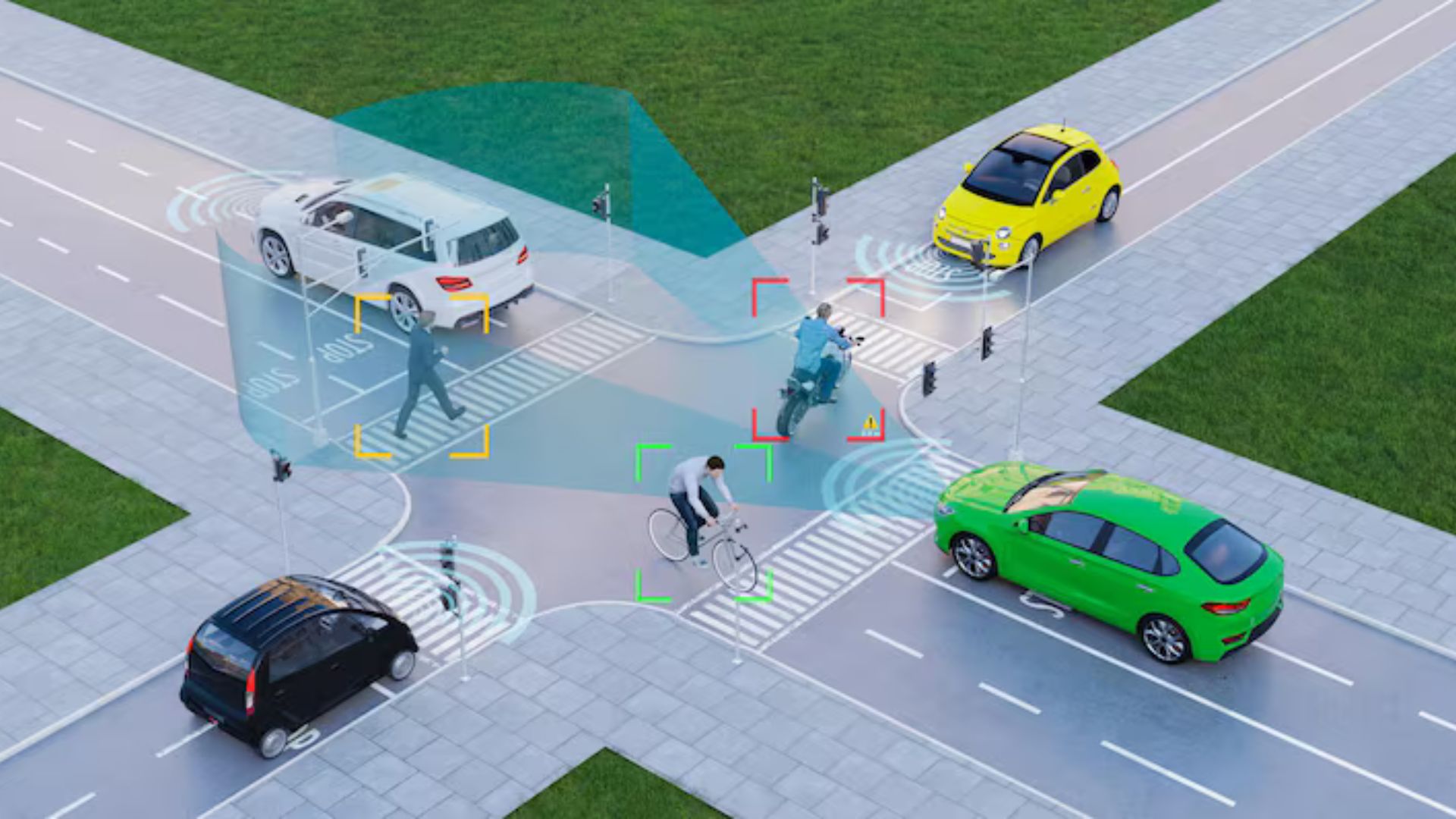
This communication model is used to communicate between vehicles and road infrastructure such as traffic lights, toll booths, road signs, and highways. Vehicle to everything (V2X) technology can help to optimize traffic flow and reduce congestion in traffic management systems.
3. Vehicle-to-Pedestrian (V2P)
V2P systems can assist with detecting the presence of pedestrians and cyclists in close proximity to the vehicle, particularly in blind spots or low-visibility situations.
4. Vehicle-to-Network (V2N)
Vehicle-to-Network communication is the ability for vehicles to communicate with cloud platforms, navigation systems and internet services in real time.
5. Vehicle-to-Grid (V2G)
EVs can talk to power grids to enable smart charging and efficient energy management.
Combined, these communication models build the foundations of V2X and give rise to a connected mobility ecosystem.
How Vehicle-to-Everything Technology Works
Vehicle to everything involves an array of wireless communication technologies, GPS systems, onboard sensors, cloud computing, and AI.
Wireless Communication Systems
Modern V2X systems are based on two key communication technologies:
- High-speed wireless communication systems
- Cellular Vehicle-to-Everything (C-V2X)
DSRC is a low-latency solution for vehicles to communicate with each other in close proximity, while C-V2X utilizes cellular networks and 5G infrastructure to achieve more extensive and rapid connectivity.
Real-Time Data Sharing
Vehicles with vehicle to everything technology are constantly communicating the following information:
- Speed and acceleration
- Vehicle position
- Brake status
- Traffic updates
- Road conditions
- Hazard warnings
This data is analyzed in real-time to assist in driving and autonomous systems decision-making to deal with threats on the road.
Sensor and AI Integration
Smart vehicles gather information on their environment through radar, cameras, LiDAR and advanced sensors. The integration of AI with V-to-E extends beyond navigation, providing a platform for predictive decision-making and intelligent navigation.
At NextGenTechLabs, we’re seeing AI as an important step toward connected mobility innovation in communication systems.
Benefits of Vehicle to Everything Technology
The government, cities and streets, and an increasing number of automotive manufacturers are embracing V2X technology and seeing the benefits for all.
1. Improved Road Safety
Amplified safety is one of the most crucial pros of vehicle to everything technology. Vehicles can detect hazards and alert.
They are widely used for safety applications such as:
- Collision warnings
- Blind spot alerts
- Emergency braking notifications
- Lane departure warnings
Connected vehicles can help reduce the number of accidents, increase road safety, and minimize the role of human error.
2. Reduced Traffic Congestion
Real-time vehicle data can be used to dynamically control traffic flow within traffic systems. This helps to decrease delays and increase travel efficiency.
Vehicle to everything technology contributes to reduction of:
- Traffic jams
- Fuel waste
- Idle time
- Travel delays
3. Improved autonomous driving support
Communication is critical for autonomous vehicles’ safe navigation. Real-time connections enhance judgement and awareness.
4. Enhanced Fuel Efficiency
The optimized routes and smoother traffic flow help to optimize fuel usage and emissions.
5. Smart City Development
Smart cities leverage vehicle to everything (V2X) technology to build intelligent transportation systems to help achieve sustainability and urban mobility targets.
We believe that smart mobility infrastructure will become a standard feature of urban development in the future, at NextGenTechLabs.
Real World Applications of V2X Systems
Vehicle to everything technology is continuously advancing in transportation use cases.
Intelligent Traffic Management
The information traffic authorities can gather and control traffic flow in real time can be used to optimize road traffic.
Emergency Vehicle Coordination
During emergencies, the communication between the Ambulances/Emergency Services and the Traffic Systems will be facilitated to clear the roadways.
Accident Prevention
Connected vehicles can be instantly alerted to:
- Sudden braking ahead
- Slippery roads
- Construction zones
- Road accidents
Fleet Management Solutions
Vehicle to everything technology is employed by logistics companies to optimize routes, keep an eye on driver behavior, and boost operational efficiency.
Smart Parking Systems
The cars can autonomously detect available parking bays and direct the driver to the parking spaces.
Public Transportation Optimization
Connected communication networks can help transit systems to better coordinate routes and schedules.
5G’s role in Connected Mobility.
5G networks are driving the development of vehicle to everything technology globally.
Ultra-Low Latency
Near-instant communication is essential for safety applications, and 5G will allow for that.
Faster Connectivity
High-speed data transfer for autonomous navigation, live traffic data monitoring and HD mapping.
Massive Device Support
5G infrastructure will be capable of handling millions of devices at once, which is suitable for smart transportation ecosystems.
Improved Reliability
Stable connectivity helps to maintain continuous communication between vehicles and infrastructure systems.
We believe 5G is a game-changer vehicle for 5G connected mobility solutions at NextGenTechLabs.
An overview of challenges ahead in Vehicle to Everything technology.
Vehicle to everything technology has great potential, but there are still several obstacles to adoption.
Cybersecurity Concerns
With connected vehicles, cybersecurity is a top concern due to the risk of hacking and data breaches.
Infrastructure Investment
It takes a high cost for governments and private sectors to develop smart roads and communication infrastructure.
Standardization Issues
There can be compatibility issues due to the different communication protocols used by various manufacturers.
Data Privacy
The collection and sharing of vehicle data is a concern for consumers and regulators.
Solving these problems will be critical to the effective deployment of connected mobility solutions.
Future of Vehicle to Everything Technology
Vehicle to Everything (V2X) technology is a bright prospect for future as day by day automotive connectivity is evolving.
Artificial Intelligence Integration
Predictive analytics and autonomous decision-making will be enhanced by AI-powered systems.
Growth of Smart Cities
Connected infrastructure will be becoming more common in urban areas to enhance transportation efficiency.
Expansion of Electric Vehicles
EV Systems will connect to the smart grid to optimize charging and energy management.
Global Adoption
As industry standards advance, further countries and car makers will embrace connected mobility.
In NextGenTechLabs, we see the intelligent communication systems that link vehicles, infrastructure and digital networks together, as a key element in the transportation of the future.
Conclusion
Connectivity, automation and intelligent communication systems are ushering in a new era in the transportation sector. Vehicle to everything (V2X) technology plays a crucial role in this change, facilitating communication between the vehicle and the environment in real-time to enhance safety, efficiency, and mobility experiences.
Through the connected vehicles, from minimizing accidents and traffic jams, to assisting in autonomous driving and smart city systems. Over the next few years, the combination of 5G, AI, and IoT systems will drive even more rapid progress in the adoption of V2X.
While there are still issues to address, including cybersecurity, infrastructure expense and standardization, the rewards are significant. Connected mobility ecosystems are a growing field of business, government, and automotive manufacturers that are investing in a safer, smarter transportation system.
With the constant evolution of innovation, NextGenTechLabs continues to investigate new and cutting-edge technologies for tomorrow in the field of smart mobility and intelligent transportation solutions.