
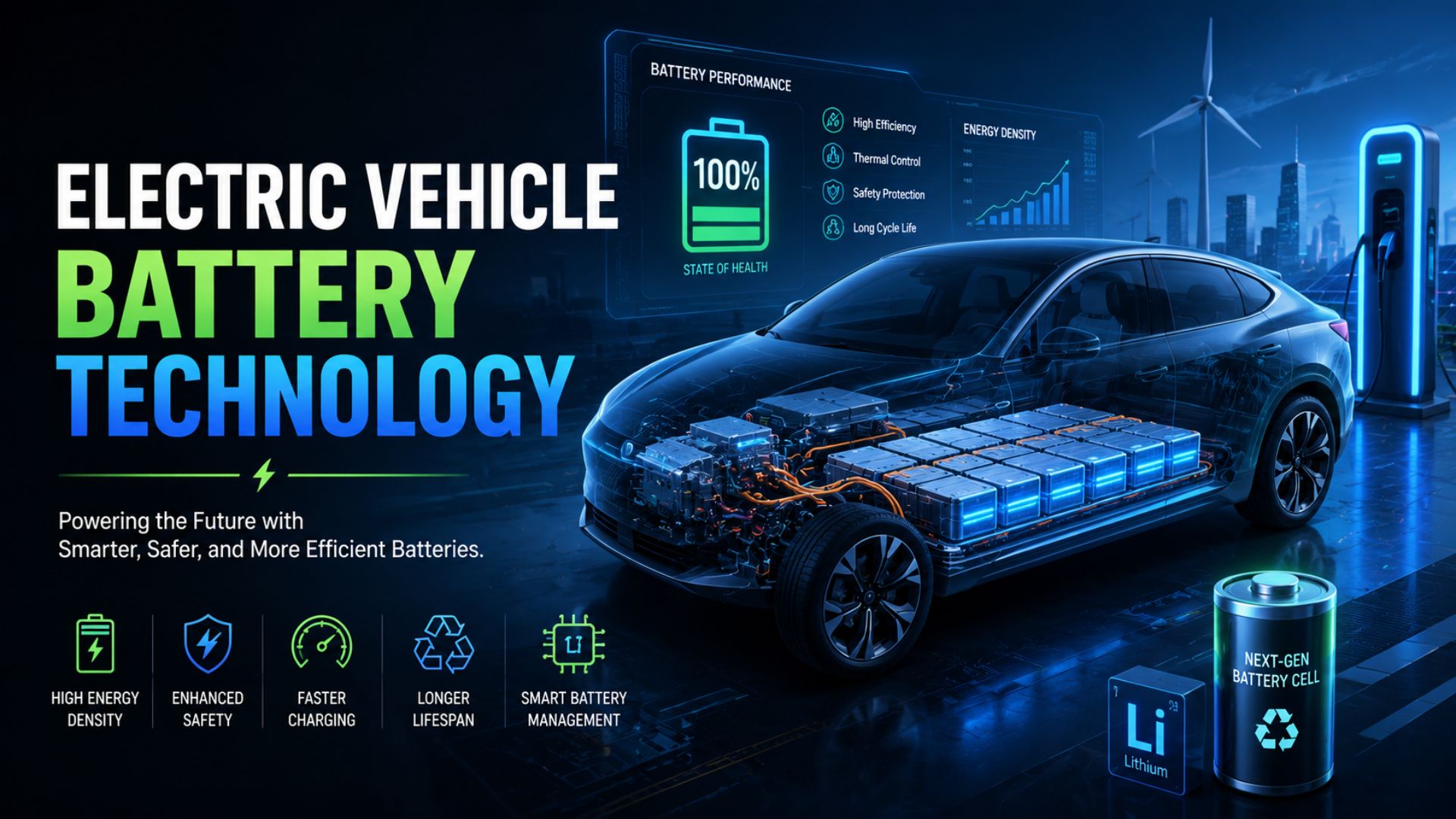
The automotive sector has been on a transformational journey, and the rise and widespread adoption of electric vehicles by consumers and businesses are defining the future of the industry. Electric Vehicle Battery Technology is at the heart of this revolution, constantly evolving to meet the demands of the times. New battery technology is improving the efficiency, safety and range of modern systems, and they are now able to provide longer driving ranges than ever before.
The development of Electric Vehicle Battery Technology in 2026 is contributing to the resolution of some of the most pressing issues of the electric mobility sector such as charging speed, battery life, sustainability and cost. These enhancements are further enabling the adoption of EVs globally.
We are closely monitoring innovations that are changing the face of transportation at NextGenTechLabs. The new advances in battery technology are making mobility brighter, smarter and more efficient.
Why EV Batteries Are Evolving Rapidly
The expectation of consumers for EVs is steadily rising. Owners are looking for more range, faster charging and reduced ownership costs. In order to fulfil these demands, automakers are pouring a great deal of money into research and development.
The advancement in EV Battery Technology is enabling manufacturers to enhance the performance of EVs and lower their production costs. Electric vehicles are becoming viable to the masses as battery systems continue to improve.
There are a number of factors spurring innovation:
- It is expected that demand for EVs will keep rising.
- Incentives and sustainability targets from government bodies.
- New materials and technologies
- The number of battery-making improvements is constantly growing.
- Increased investment in clean energy technologies and resources
The On-going Advancement of EV Battery Technology is playing a vital role in meeting the head-on challenge from conventional fuel-powered vehicle.
Solid-State Batteries and Their Impact
Solid-state batteries are one of the most promising advancements in EV Battery Technology.
The difference between conventional lithium-ion batteries, which require liquid electrolytes, and solid-state batteries is that the latter are characterized by solid electrolytes. This piece of innovation will have several advantages which would pave the way for a revolution in the EV industry.
Improved Safety
Ensuring safety is a key priority in EV Battery Technology. The risk of over heating and thermal runaway is greatly decreased with solid-state batteries.
Higher Energy Storage
These batteries hold more power in smaller volumes, so they can power vehicles for longer.
Longer Lifespan
Solid-state designs are likely to deteriorate more slowly, which in turn will help to increase battery life and decrease battery replacement expenses.
Faster Charging
Several researchers think that solid-state batteries will enable much faster charging than conventional battery systems do.
NextGenTechLabs sees solid-state technology as one of the most promising advancements to come along in the battery industry.
Faster Charging Technologies
One of the most significant parameters that affects the EV penetration is convenience of charging.
But, with advancements in Electric Vehicle Battery Technology, rapid charging is becoming more and more possible.
Ultra-Fast Charging Networks
With new battery architectures, speeds of charging can be raised still further, and reliability is ensured.
Better Heat Management
The advanced cooling systems allow for battery cells to be protected during high speed charging.
Improved Charging Efficiency
The contemporary EV battery systems aim to minimize the energy loss and optimize the charging process.
Charging times have been reducing and EV Battery Technology is playing a major role in de-burring one of the main concerns of potential EV buyers.
Higher Energy Density and Extended Range
Energy density is the amount of energy stored in a battery per unit volume and/or weight.
One of the key challenges for scientists developing Electric Vehicle Battery Technology is to increase energy density.
Benefits of Higher Energy Density
Longer Driving Range
Reducing the number of times vehicles need to be recharged increases the distance they will go on each charge.
Reduced Weight
Lighter battery packs mean better efficiency and performance of the vehicle.
Better Space Utilization
A compact battery design offers greater design flexibility and inside space.
New developments in EV Battery Technology are making it possible for EVs to compete with a lot of gas-powered vehicles in terms of range.
Artificial Intelligence is playing a significant role in Battery Management
AI is an important part of the contemporary battery system.
The monitoring of battery health, temperature, charging cycles, and overall performance of the batteries can be facilitated using advanced software solutions to optimize Electric Vehicle Battery Technology.
Predictive Maintenance
AI can detect issues with the battery, even before they impact performance in the vehicle.
Intelligent Charging
Smart charging algorithms help minimize battery degradation and battery life.
Enhanced Efficiency
Machine learning helps to optimize delivery of energy into battery cells.
According to NextGenTechLabs experts, AI-driven battery management will be a significant contributor in the future development of EVs.
Sustainable Manufacturing Practices
Production of batteries has now become a major concern of sustainability.
EV Battery Technology manufacturers are striving to minimize the impact of EV Battery Technology manufacturing on the environment, using cleaner manufacturing methods and responsible sourcing.
Ethical Material Sourcing
Companies are enhancing transparency in their supply chains and minimizing the use of environmentally sensitive mining activities.
Renewable Energy Production
There are a number of battery production plants that are currently using renewable energy.
Reduced Waste Generation
Manufacturers are better able to use materials due to improvements in production methods.
The initiatives are contributing to a more sustainable EV Battery Technology across its lifecycle.
Treatment of batteries in the circular economy.
The recycling of batteries is gaining importance with the ever rising penetration of EVs in the market.
Electric Vehicle Battery Technology is sustainable with the help of modern recycling technologies which recover valuable substances like:
- Lithium
- Nickel
- Cobalt
- Copper
- Aluminum
Advantages of Recycling
- A decrease in reliance on mining.
- Lower environmental impact
- Improved resource efficiency
- A more sustainable manufacture of batteries.
Battery recycling is seen as a key element of a long-term sustainability strategy for EVs at NextGenTechLabs.
Emerging Battery Chemistries
In addition, ongoing research is underway to find other suitable materials that may further enhance Electric Vehicle Battery Technology.
Sodium-Ion Batteries
Sodium is far more available, and cheaper than lithium, making it an attractive alternative.
Lithium-Sulfur Batteries
These batteries may be able to provide much more energy density.
Graphene-Based Batteries
Graphene can, among other things, enhance the conductivity of materials, charging speeds and battery durability.
Silicon-Anode Batteries
More lithium ions are able to be stored on the silicon than the traditional graphite anodes, which increases battery capacity and efficiency.
These breakthroughs are just some of the innovations in the exciting future of Electric Vehicle Battery Technology.
Financial incentives for EV owners
Modern battery systems offer a few advantages to the consumers.
Lower Ownership Costs
Comprehendable batteries decrease charging and maintenance costs.
Greater Convenience
Shorter charging time and greater range make for better, daily usability.
Increased Reliability
Advanced battery management systems help to maintain battery performance.
Improved Resale Value
Long Battery Life is a factor that helps support resale value of vehicles.
The progress of Electric Vehicle Battery Technology is increasing the need of EVs to mainstream consumers. The progress of Electric Vehicle Battery Technology is increasing the need of EVs in mainstream consumers.
Future of EV battery innovation
Electric Vehicle Battery Technology’s future seems very bright.
The following are some innovations that are expected to influence the next generation of electric cars:
- Commercial solid-state batteries
- Ultra-fast charging systems
- AI-powered battery optimization
- Advanced recycling technologies
- Sustainable production methods
- New battery chemistries
Industry experts and researchers at NextGenTechLabs believe that battery innovation will continue to be a key factor in EV adoption in the coming 10 years.
Continued investment will drive Electric Vehicle Battery Technology to become increasingly more efficient, cost effective and environmentally friendly.
Conclusion
The advancements taking place in Electric Vehicle Battery Technology during 2026 are transforming the future of transportation. Electric vehicles are becoming more practical than ever before, with innovations like solid-state batteries, AI-based battery management systems, quicker charging infrastructure, advanced battery recycling techniques, and eco-friendly production.
Battery innovation will be a key component of the electric mobility revolution at NextGenTechLabs. With continued advancements in Electric Vehicle Battery Technology, consumers should have access to more affordable EVs, increased driving ranges, quicker charging times, and safer driving.
The EV Battery Technology roadmap is driving the future of transportation and continuing its progress.